
REVIEW · GUIDED
Aarhus: Harbour Cruises with local guide
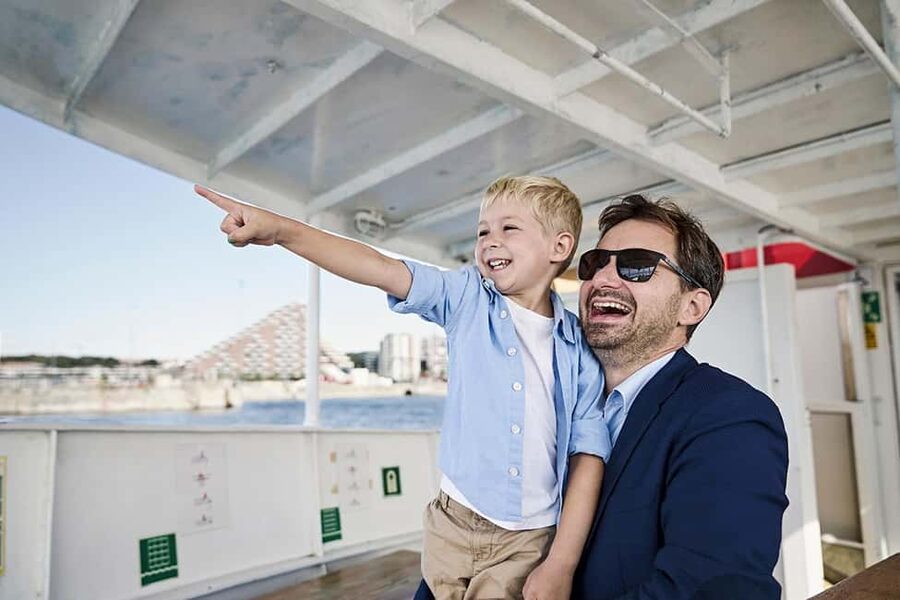
Aarhus looks different from the water. This 75-minute cruise gives you a clear view of the city’s old harbor, bold new buildings, wooden ships, and working waterfront while a live guide shares stories about Vikings, fairy tales, architecture, and local life. I especially like the strong mix of history and modern design, plus the fact that children can take part rather than simply sit and listen.
The cozy ship has a bar serving hot and cold drinks and snacks, along with child activities and accessible toilets. The main consideration is scope: this is a harbor sightseeing trip, not a full tour of central Aarhus, and the experience depends on how much you enjoy spoken commentary while moving between several sights.
Key things to know before sailing
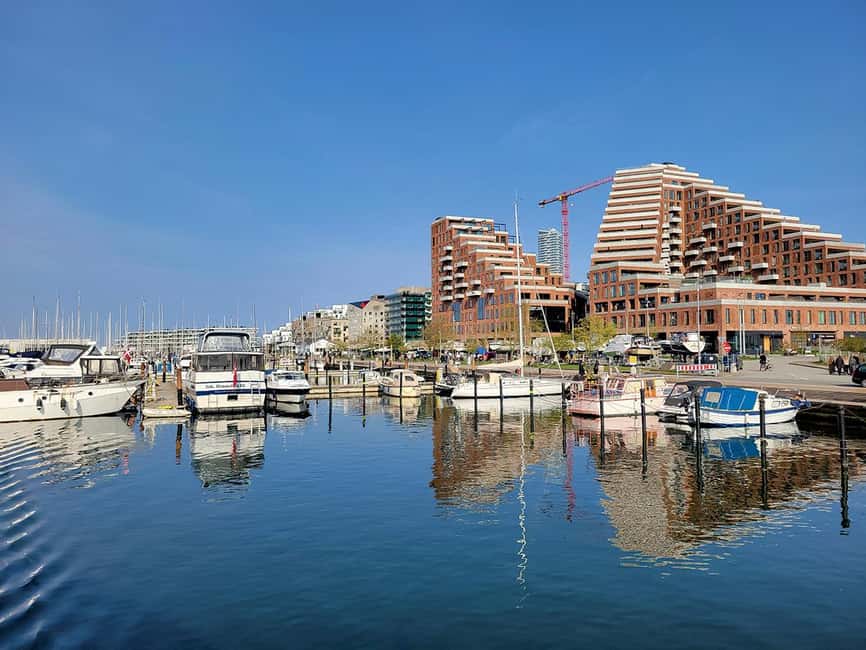
- The tour lasts 75 minutes, giving you time to see both the historic harbor and the new Aarhus Ø district.
- The guide speaks English, German, and Danish, so check the available language when choosing your departure.
- Children get more than a view from the window, with activities, a chance to steer the boat on some departures, and a certificate reported by families after the ride.
- The route links old and new Aarhus, from the 1897 Customs House and Viking-era Aros to The Iceberg and Denmark’s tallest building.
- The ship has a bar, snacks, toilets, and wheelchair-friendly access, useful on a 75-minute outing.
- The meeting point is behind the Endless Connection fountain, near DOKK1 and the harbor’s public spaces.
Starting behind the Endless Connection fountain
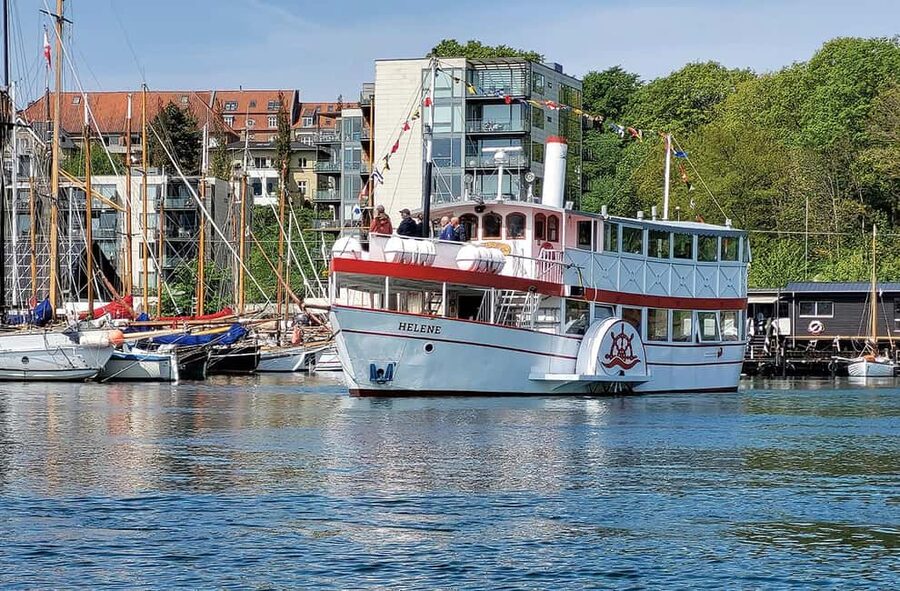
The ship lies behind the Endless Connection fountain, a practical meeting point in the middle of Aarhus’s harborfront. Look for the fountain’s looping paths and water channels. In summer, children play through the labyrinth-like design, so this is also a pleasant place to gather before boarding.
Nearby is Sirene, a rounded, organic sculpture created by Prince Henrik of Denmark. Seeing it before you sail helps set the tone for the trip. Aarhus’s waterfront is not just a line of quays and boats. It is a public space filled with art, architecture, play areas, libraries, and reminders of the city’s past.
The exact boarding arrangement is not described in detail, so I would allow a little extra time to find the ship, especially if you are traveling with children or using a wheelchair. The meeting point itself is easy to identify from the named fountain.
More Guided Tours in the world:
- Seattle’s Original Guided Harbor Cruise
★ 4.5 · 2,077 reviews - Rotterdam: Harbor Cruise with Live Guide
★ 4.0 · 1,270 reviews - Seattle: Harbor Cruise with Local Guide
★ 4.8 · 599 reviews
The Customs House and Aarhus’s fairy-tale side
One of the first major sights is the old Customs House, built in 1897 by Hack Kampmann, one of Aarhus’s important architects. Kampmann’s interest in fairy tales and mythology appears in his work, and the guide uses the building to connect architecture with the stories and symbols of Denmark.
This is a good early stop because it gives you a quick sense of the city’s layers. Aarhus is not only a university city with modern apartment blocks. Its harbor still carries traces of the commercial port that shaped local life.
The cruise commentary also brings in fairy tales, Vikings, and the old tugboat Jacob. That mix may sound broad, but it suits the waterfront. A single harbor can hold a medieval name, a nineteenth-century customs building, a wartime vessel, and ambitious twenty-first-century housing.
DOKK1, the giant bell, and the name Aros
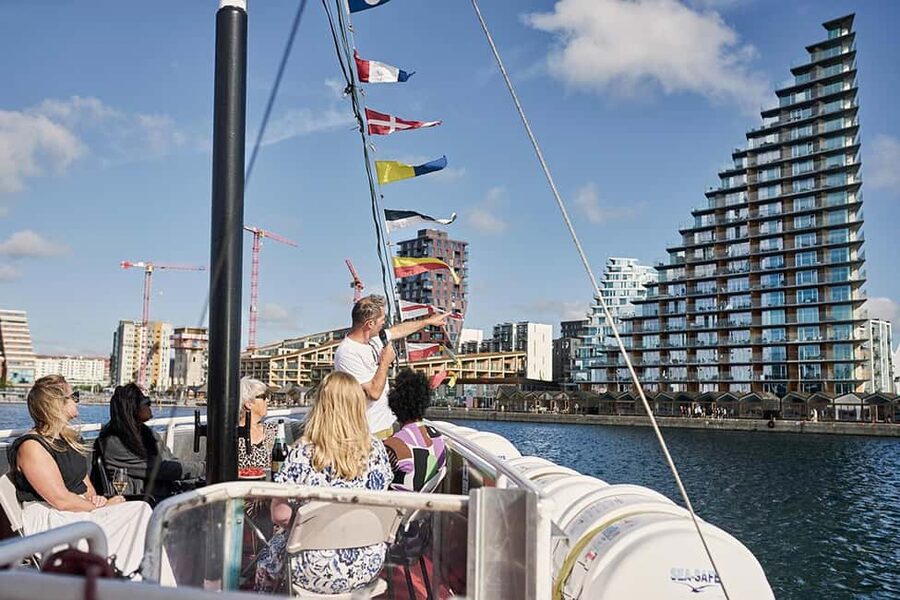
The cruise passes DOKK1, the large public library and citizen service center. Its setting makes the building feel like more than a library. It is part of the city’s open waterfront, with public activity right beside the water.
In front of DOKK1 is a giant bell. Local custom says it is rung when a new resident of Aarhus is born. That small detail is one of the more human parts of the tour. You are not just looking at a building. You are hearing about how the city marks new life and welcomes people into the community.
The guide also explains the Viking-era name Aros, meaning the city at the mouth of the river. When smoke signals appeared from Mols Bjerge, the people of Aros were expected to grab their weapons and row into battle.
This story gives the harbor a practical purpose. The water was once a route for defense, trade, and movement, not merely a scenic backdrop. You will not get a full Viking history lesson in 75 minutes, but the story makes the city’s position on the coast easier to understand.
Jacob, the tugboat with a wartime past
The old tugboat Jacob is one of the cruise’s most unusual sights. It was built in Texas in 1943 and took part in the D-Day landings in Normandy.
That detail changes the way you look at a small working boat. Jacob may seem like a modest harbor vessel, but its past reaches far beyond Aarhus. For anyone interested in ships, military history, or the hidden stories attached to ordinary objects, this is a highlight.
The tour does not present the harbor as a museum frozen in time. Boats still have jobs, old vessels still have stories, and the guide uses those details to connect Aarhus with events outside Denmark.
A few more boat trips around the world worth a look
- NYC: Circle Line 2h Harbor Lights Cruise Skip-The-Box-Office
★ 4.6 · 8,222 reviews - Hamburg: 90-Minute Evening Lights Harbor Cruise
★ 4.5 · 7,728 reviews - Hamburg: 1-Hour Evening Harbor Lights Cruise
★ 4.4 · 5,073 reviews - San Francisco: Golden Gate Bay Cruise
★ 4.7 · 3,644 reviews
Wall art and the city’s modern message
The route includes large murals, including works connected with the United Nations Sustainable Development Goals and A Miner from Novosibirsk. These pieces add a different kind of cultural stop to the cruise.
The mural subjects are not simply decorative. They bring global issues, work, and everyday human experience into a port setting. You see how public art can give industrial or newly developed areas a stronger identity.
The viewing angle matters here. From the ship, you see the full scale of the murals in a way that can be harder from street level. Still, light and weather will affect how much detail you can make out, so do not expect a museum-style art tour.
Bjarke Ingels, small summer homes, and copper-clad towers
The commentary turns to architect Bjarke Ingels and several striking buildings along the waterfront. You see bathhouses, the Aarhus building, and the Campanile.
The small summer homes are an amusing contrast to the larger apartment towers. Each measures only 21 square meters yet costs DKK 2.8 million. Their tiny footprint and high price say plenty about the appeal of living beside the water.
The building called Aarhus is shaped like two letter A’s and contains 250 apartments. Each apartment has a terrace or roof garden. From the boat, you get a useful view of how the building’s shape works as a whole, rather than seeing it one facade at a time from a city street.
The Campanile has 75 apartments and a clock dial larger than Big Ben’s. The tower is covered in copper, which changes color over time toward an iridescent green. This is the sort of detail that is easy to miss without a guide pointing it out.
Architecture fans will get the most from this section. If your main interest is old churches and medieval streets, the modern buildings may feel less compelling. The cruise is deliberately a portrait of present-day Aarhus as much as a look backward.
Aarhus Ø and The Iceberg
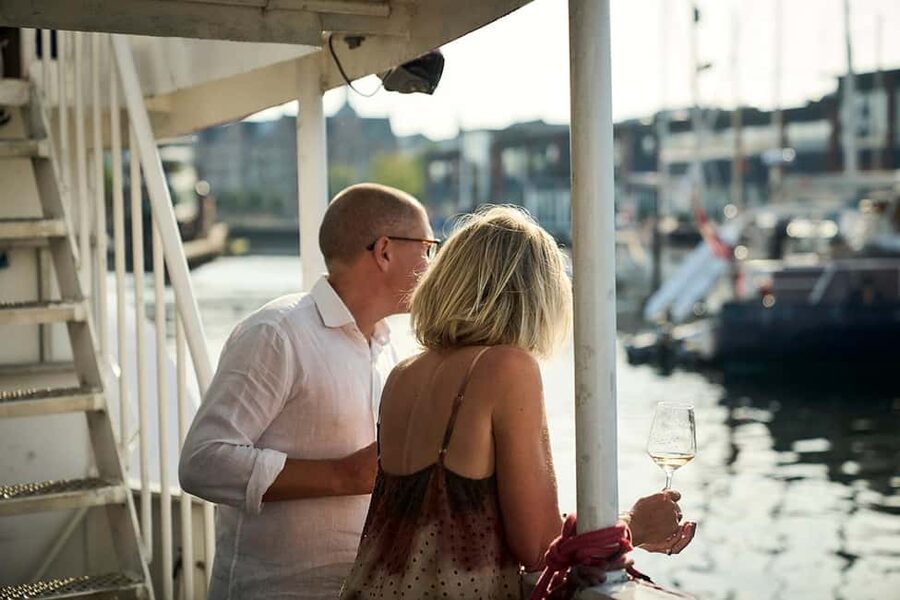
Aarhus Ø, or Aarhus East, is a new district built out into the sea. Its architecture is bold, sometimes playful, and best understood from offshore.
The Iceberg contains 210 apartments and is shaped to resemble a broken iceberg. Its jagged profile creates a memorable view, though the design is more than a visual trick. The shape helps form different terraces and views for the apartments.
The Lighthouse is another major landmark. At 142 meters, it is Denmark’s tallest building. From the ship, you can judge its height in relation to the lower harbor buildings and the water around it.
This part of the cruise is valuable because you can see the city’s growth from a distance. From land, a new district can feel like a collection of separate buildings. From the harbor, Aarhus Ø reads as one large change in the city’s relationship with the sea.
The bathhouse that shocked Aarhus
The cruise passes a bathing establishment where men and women were first allowed to bathe together in 1933. At the time, the idea caused an outcry.
That story gives the waterfront a welcome bit of social history. The harbor was not only a place for ships and warehouses. It was also a setting where Danish ideas about public life, privacy, and leisure changed.
This is a short story, but it helps keep the tour from becoming an architecture lecture. The guide moves between buildings, public customs, and local humor, which keeps the pace varied.
Sailing, wooden ships, and working boats
The Aarhus International Sailing Centre is another highlight. Its design fits the clean, modern look of the waterfront, and it serves as a training base for elite sailors, including Olympic gold medalist Anne-Marie Rindom.
You then reach the Wooden Ship Harbour, described as the largest wooden ship harbor in the Nordic countries. Around 70 historic wooden ships are kept there. This is one of the most atmospheric parts of the route because the boats represent a living maritime tradition rather than a collection behind glass.
The harbor is still active throughout the year. You also see fishing boats and houseboats. The houseboats may be permanently moored, but they must have a working engine. The old fishing boats are now mainly used for hobbies, while former auction halls have become restaurants.
This section gives you a more grounded view of harbor life. The newer apartment blocks receive much of the visual attention, but the wooden ships, fishing boats, and houseboats show that the waterfront still has many uses.
Marina views and Klintegården
The cruise also reaches the marina and looks up toward Klintegården, built in the 1930s by engineer Ove Christensen. The buildings reflect modernist ideas influenced by German design.
Klintegården adds another period to the route. You have already seen nineteenth-century architecture, wartime vessels, Viking stories, and new high-rises. Now you get a look at early twentieth-century modernism.
The marina keeps the route moving between different kinds of water activity. Depending on the season and conditions, you might see more or less movement around the boats, but the point is not simply to count vessels. It is to understand how the harbor continues to serve residents, sailors, businesses, and people who live on the water.
A family-friendly boat ride, not just a narrated tour
Families appear to get especially good value from this cruise. Children have activities during the ride, and some young passengers have been allowed to steer the boat. A certificate at the end can turn the outing into a small achievement rather than just another sightseeing stop.
A visit to the captain is another reported highlight for children. Since those elements may depend on the crew and operating conditions, I would not treat them as guaranteed parts of every departure. Still, the cruise clearly makes an effort to involve younger passengers.
The ship has a bar with hot and cold beverages and snacks. That matters on a cool or rainy day, when a drink can make the difference between enjoying the views and simply waiting for the boat to return. The 75-minute length is also manageable for most families: long enough to feel worthwhile, short enough not to consume an entire day.
Comfort, access, and practical value
The ship is described as comfortable and cozy, with toilets and wheelchair-friendly access. That makes this a useful option for people who want a harbor view without a long walk around the waterfront.
The price is $25 per person. For 75 minutes, the value is strongest if you want guided context, not only a boat ride. You are paying for the harbor views, a live guide in English, German, or Danish, family activities, and a route that reaches parts of Aarhus Ø that may be less convenient to explore on foot.
If you are happy to stroll the waterfront alone and read about the buildings later, you may find the ticket less essential. The cruise earns its price through the commentary and the changing viewpoint. It also saves you from piecing together the story of each building yourself.
Cancellation is allowed up to 24 hours before departure for a full refund, and you can reserve now and pay later. These terms help if your Aarhus plans depend on weather or a changing day schedule.
What the rating tells you about the experience
The overall rating is 4.5 out of 5 from 53 reviews, a strong result. The highest praise focuses on the guide’s information, impressive views of the harbor city, the friendly team, and the way the crew includes children.
One displayed review carries a one-star score but contains clearly positive comments about the guide and the tour. That suggests the individual score may not match the written opinion, so I would place more weight on the overall rating and the repeated themes in the comments.
The most useful takeaway is that the cruise works especially well when the crew is active with families. Adults get the city stories and architecture, while children may get a certificate, time at the controls, or a visit with the captain.
Who should book the Aarhus harbour cruise?
I would choose this cruise if you have one day in Aarhus and want a quick orientation from the water. It is also a good pick for architecture fans, families, anyone interested in maritime history, and visitors who want an accessible sightseeing option.
You should think twice if you want a quiet, self-guided boat ride with little commentary. The tour packs in many subjects, from Vikings and D-Day to public art and modern apartment design. That variety is a strength, but it also means each topic gets only a short explanation.
Book it for the broad view: old Customs House, DOKK1, Jacob, the Wooden Ship Harbour, Aarhus Ø, The Iceberg, and the Lighthouse all fit into one compact outing. At $25, it is a sensible introduction to the city’s waterfront, with enough family-friendly extras to make the ticket feel worthwhile.
FAQ
How long is the Aarhus harbour cruise?
The cruise lasts 75 minutes, or 1 hour and 15 minutes.
What languages does the guide speak?
Live guides are available in English, German, and Danish.
Where does the boat leave from?
The ship lies behind the Endless Connection fountain in Aarhus.
Is the cruise wheelchair accessible?
Yes. The experience includes wheelchair-friendly access and accessible toilets.
Is food or drink available on the ship?
Yes. There is a bar serving hot and cold beverages and snacks.
Can children take part in activities?
Yes. Child activities are provided. Children have also been able to steer the boat and receive a certificate, though these extra moments may depend on the departure and crew.
Can I cancel the booking?
You can cancel up to 24 hours in advance for a full refund. You can also reserve now and pay later.
Just added around the world
- Wismar: Harbor Cruise with Sea Animal Fishing and Guide★ 4.6 · 22 reviews
- Yokosuka: Boat Trip to an Uninhabited Island★ 5.0 · 16 reviews
- Yokosuka : Scenic Hidden Gem Hike and Naval Port Cruise★ 5.0 · 13 reviews
- Vancouver: North Shore Food Tour with Harbour ride★ 4.3 · 2 reviews
- Victoria: Kayak Harbour Tour★ 4.8 · 8 reviews
- Wednesday Regatta with harbour tour★ 4.8 · 8 reviews
- Wellington 90 minute Harbour Cruise★ 5.0 · 6 reviews
- Valletta: 3 Cities Guided Tour & Grand Harbour Boat Tour★ 4.8 · 15 reviews
Guided, compared.

Port Arthur Full-day Guided Tour with Harbour Cruise and Tasman National Park
Read our review →
2 Hour Guided Boat Tour in Gig Harbor and Narrows Bridges
Read our review →
Three Cities guided tour including harbour boat tour
Read our review →
Half-Day Guided Boat Tour of Nassau Harbour and Rose Island
Read our review →Browse the lists this tour appears in