
REVIEW · HARBOUR WALKING TOURS
Rotterdam Walking Tour and Harbor Cruise
Rotterdam refuses to look ordinary. This private four-hour tour pairs a thoughtful city walk with a 75-minute harbor cruise, giving you a clear introduction to a Dutch city rebuilt in striking modern form. I like the focus on Blom’s tilted cubic houses, and I like that the guide can meet you at a hotel, cruise ship, or train station. The main catch is simple: about three hours are spent walking, so comfortable shoes are essential.
The route also covers the few major buildings that survived World War II, including the old town hall, Laurens Church, and the post office. Guides such as Niels, Adrian, Ulla, and Gerd Baas have earned especially warm praise for their clear explanations and friendly approach. At $188 per person, this is not a budget stroll, but the private format and cruise make it a reasonable choice if you want a focused first look at Rotterdam without organizing the pieces yourself.
Key points at a glance
- Rotterdam’s cubic houses: See Piet Blom’s famous 38-cube complex, designed as an abstract urban forest.
- A city shaped by wartime destruction: The walk explains how Rotterdam’s rebuilding produced one of the Netherlands’ boldest architectural centers.
- Three hours on foot: Expect a steady city walk through the old harbor, shopping district, and central sights.
- Market Hall included: Visit the Netherlands’ first covered market, where food stalls and apartments share one dramatic arch.
- A 75-minute harbor cruise: Finish at a slower pace with views along Rotterdam’s working waterfront.
- Private guiding in four languages: Tours are offered in English, German, Spanish, or Dutch.
Why Rotterdam needs a walking tour
Rotterdam can be confusing if you expect a traditional Dutch city center. Amsterdam, Delft, and Leiden offer rows of old canal houses. Rotterdam offers broad streets, new towers, rebuilt blocks, and daring designs that seem to have arrived from several different decades at once.
That contrast is the point. World War II destroyed much of the central city, and Rotterdam chose an intensive rebuilding program rather than simply recreate what had been lost. The result is a place where older survivors sit beside modern experiments. A guide helps you read that change instead of seeing only a collection of unusual buildings.
I like the way this tour treats architecture as part of the city’s story. You are not simply led from one photo stop to another. The walk links the destruction, the postwar rebuilding, the shopping center, the old harbor, and the newer Market Hall into one understandable sequence.
The private format matters here. Rotterdam’s architecture can reward questions, especially if you want to know why a building was designed in an odd shape or how the city changed after the war. Your guide can adjust the pace and explanation to your interests, rather than following a fixed group script.
More Waterfront Walking Tours in the world:
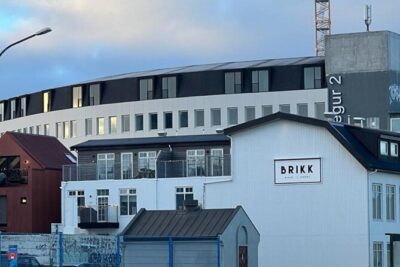
- Reykjavik Food Tour – Old Harbor Walking Tour
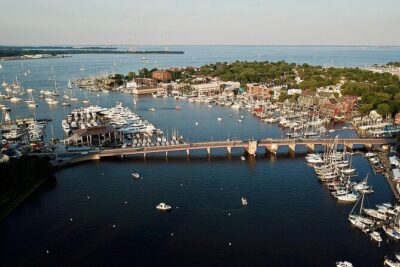
★ 5.0 · 41 reviews - Annapolis Historic Walking Tour at Harbor and Naval Academy
★ 5.0 · 38 reviews - Toronto Downtown Walking Tour With Tower and Harbour Cruise
★ 4.5 · 37 reviews
Meeting at The Destroyed City
The tour begins at The Destroyed City, a powerful statue by Ossip Zadkine at 3011 TK Rotterdam. It is an apt meeting point because the sculpture reflects the city’s wartime destruction and the emotional break between old Rotterdam and the city that followed.
Starting here gives the walking tour a clear theme from the first minutes. You are not just beginning near a random landmark. You are starting beside a work tied to Rotterdam’s memory, then moving into the city that grew from that loss.
Your guide can also arrange the start at your hotel, river cruise ship, or Rotterdam train station, according to the tour details. That flexibility is useful if you have only a few hours in port or are arriving by train from another Dutch city. Confirm the exact starting arrangement when booking, since the listed central meeting point is The Destroyed City.
Blom’s cubic houses and Rotterdam’s tilted geometry
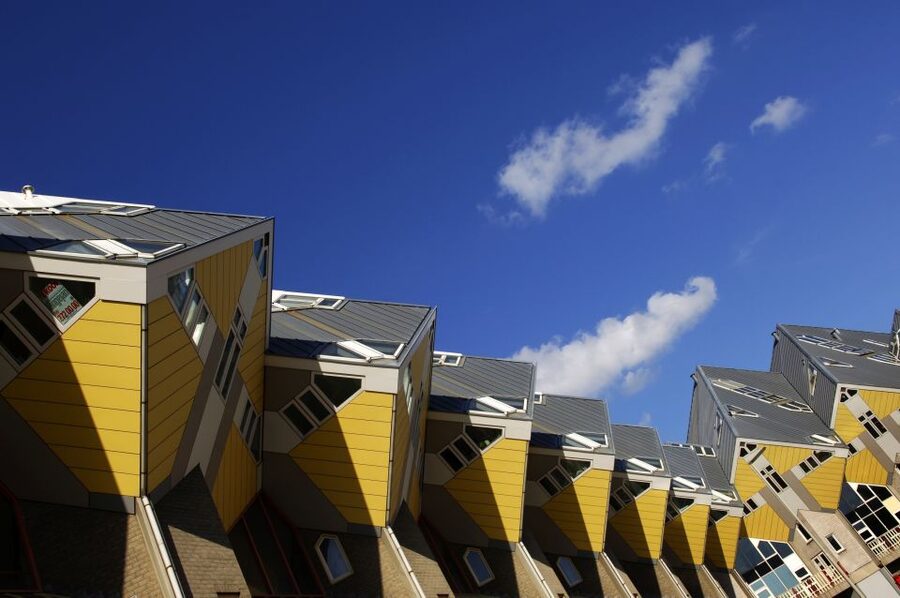
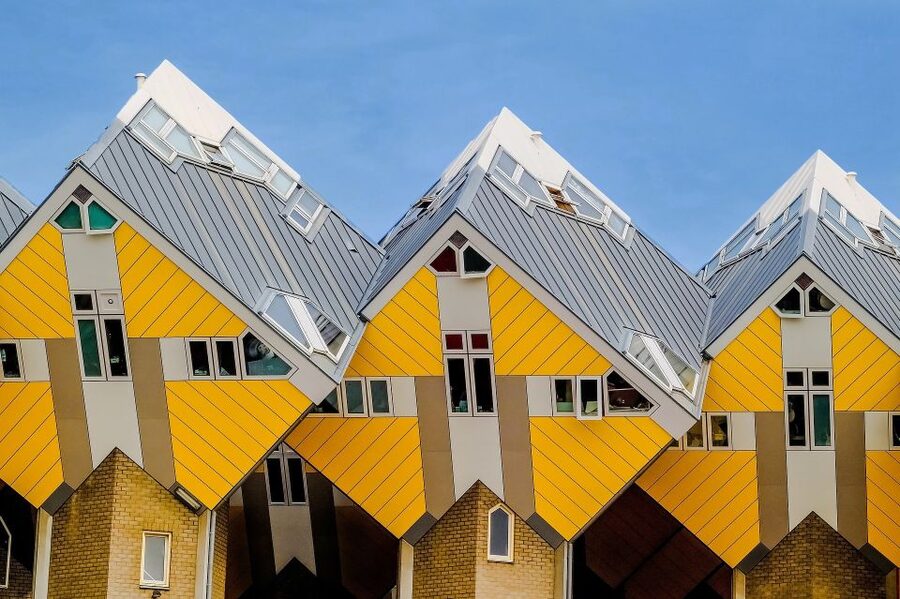
The cubic houses are the tour’s most unusual architectural stop. Designed by Piet Blom, the complex contains 38 cubes arranged as an abstract forest. Blom imagined each house as a tree and the full group as a dense urban woodland.
That idea becomes easier to grasp when you see the buildings together. The cubes are tilted dramatically, creating a row of homes that appear to balance on points. They are playful, but they are also a serious attempt to rethink how people live in a city.
I would allow time to look up, not just ahead. The geometry changes as you walk around the complex, and the buildings make more sense from different angles. Your guide can add the architectural context that a quick photograph misses.
This stop is especially good for visitors who think Rotterdam is all offices and postwar concrete. The cubic houses show another side of the city’s rebuilding: experimental, imaginative, and willing to make daily housing part of the public spectacle.
There is a practical tradeoff. The houses are a visual stop rather than a full museum visit, and the tour information does not promise entry into one of the cubes. If you want an interior visit, ask about that in advance. The value here is mainly the explanation and the chance to see the full complex in its urban setting.
The old harbor and the few buildings that survived
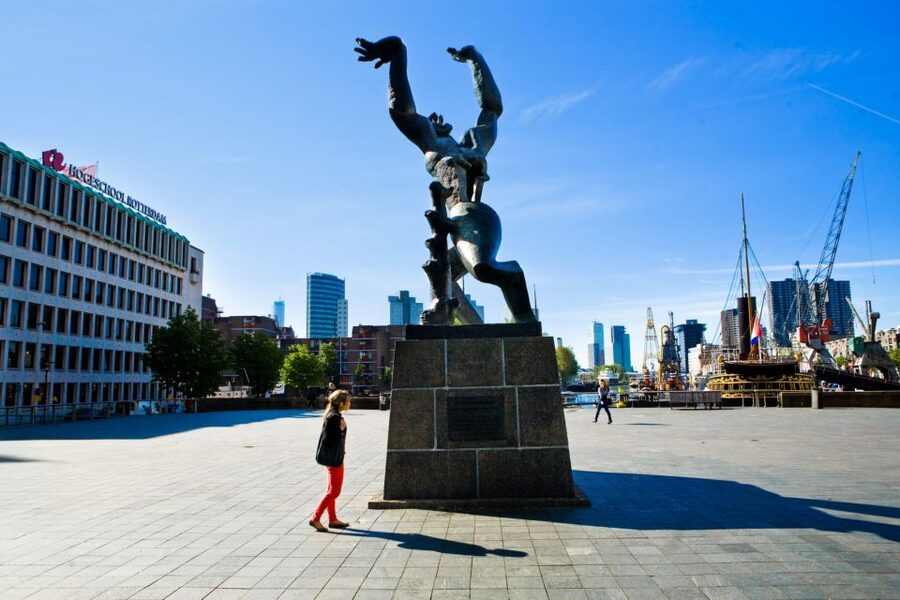
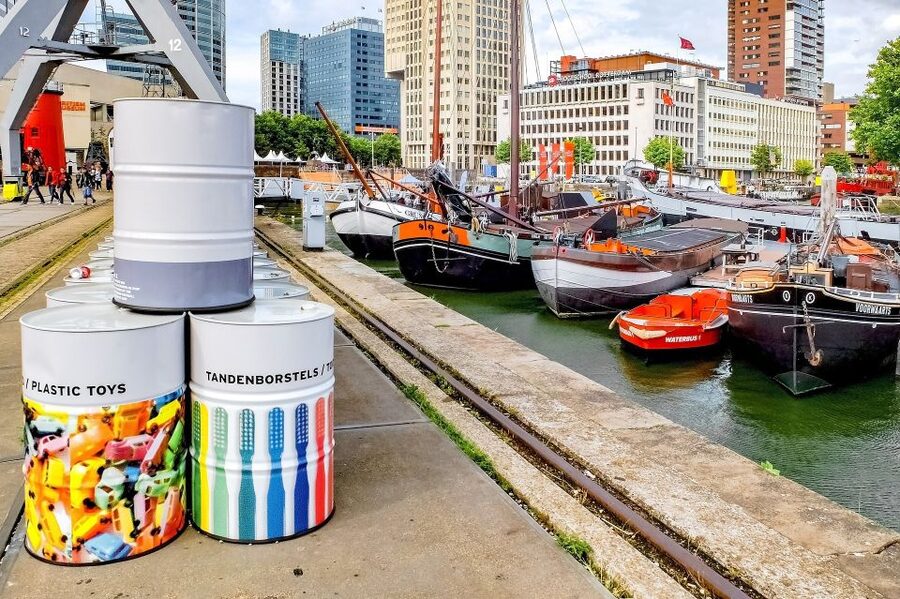
From the cubic houses, the walk continues through Rotterdam’s old harbor and toward the central shopping area. This part of the route helps you compare the city’s surviving past with its rebuilt present.
The old harbor gives the walk a more human scale. After the sharp angles of the cubic houses, the water and historic port setting provide a pause. You can also see how Rotterdam’s identity remains tied to shipping, trade, and its relationship with the harbor.
The route passes several historic buildings that survived the war. These include the post office, the old town hall, and Laurens Church. Each gives you a reference point for what Rotterdam looked like before the destruction and what remained afterward.
Laurens Church is especially important because it is one of the central reminders that the city’s older architectural identity did not vanish completely. The town hall and post office add another layer, showing how civic and public buildings helped preserve a link with earlier Rotterdam.
Your guide’s role is useful here. Without context, the surviving buildings may look like isolated older structures among newer ones. With an explanation of what survived and what had to be rebuilt, the city center becomes easier to read.
A few more boat trips around the world worth a look
- NYC: Circle Line 2h Harbor Lights Cruise Skip-The-Box-Office
★ 4.6 · 8,222 reviews - Hamburg: 90-Minute Evening Lights Harbor Cruise
★ 4.5 · 7,728 reviews - Hamburg: 1-Hour Evening Harbor Lights Cruise
★ 4.4 · 5,073 reviews - San Francisco: Golden Gate Bay Cruise
★ 4.7 · 3,644 reviews
Rotterdam’s underground shopping route
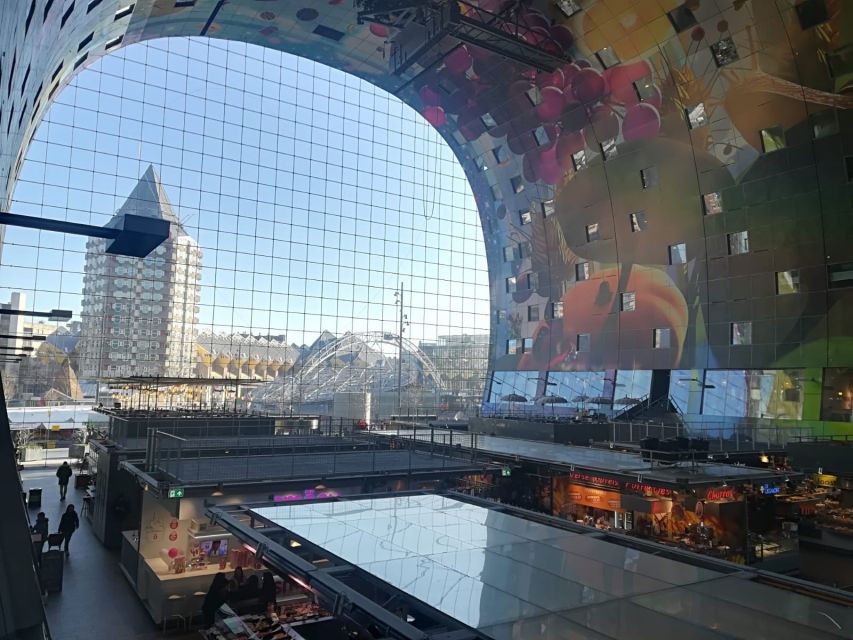
The walk also passes part of the central shopping district that runs below ground. This section was nicknamed the sales gutter, a blunt local-style name that tells you something about Rotterdam’s practical attitude toward urban design.
The route is not built around polished old streets alone. It shows how the city made room for commerce in a modern, rebuilt center. The underground shopping area may not be the most picturesque stop, but it adds useful context to the city’s postwar planning.
I appreciate this kind of inclusion. A good city walk should explain how a place functions, not just point out its prettiest buildings. Here you see the ordinary side of Rotterdam: shopping, movement, and the effort to organize a busy city after wartime destruction.
The shopping district also gives the walking portion some variety. You move from memorial sculpture to bold housing, then older civic buildings, harbor spaces, and practical commercial streets. That range keeps the route from feeling like a single architecture lecture.
Market Hall, food, housing, and a huge interior arch
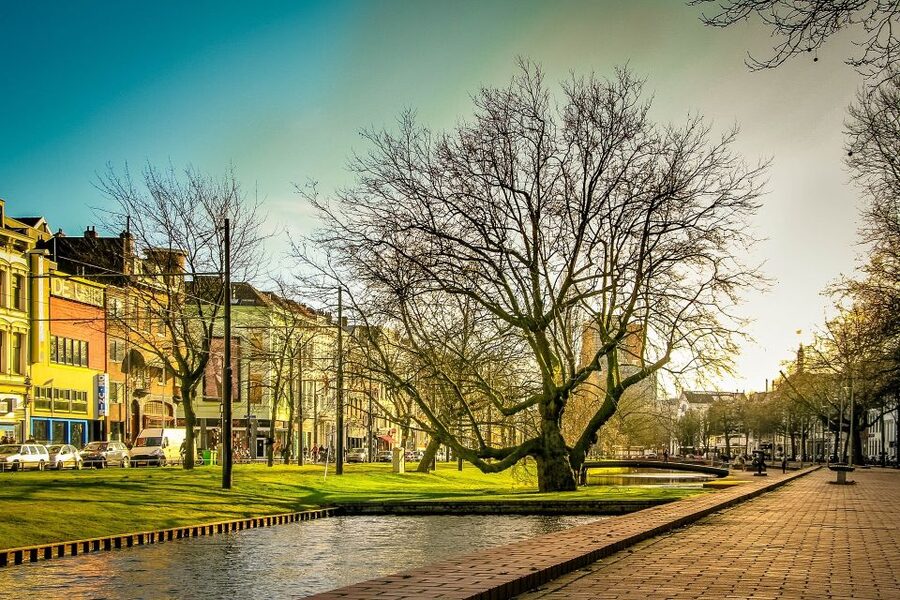
The Market Hall is one of the tour’s major modern landmarks. It opened on October 1, 2014, after five years of construction, and was the first covered market in the Netherlands.
The building combines a food market with housing inside one large arch. That mix is part of its appeal. You are looking at a place where people shop and eat below apartments, all within a piece of architecture designed to attract attention from outside and inside.
The Market Hall works well near the end of the walking route because it gathers many of Rotterdam’s themes in one place. It is modern, practical, bold, and closely tied to food and city life. The building also makes a useful contrast with the older church and town hall earlier in the walk.
Food is not included in the tour price, so think of the Market Hall as a place to see and explore rather than a provided meal stop. You might find it tempting to buy something, but the schedule is built around the guided walk and the cruise. If you want to eat there, ask your guide how much time is available.
This is also a good spot for photos, although the scale of the arch can make it hard to capture in one frame. Look up inside the building. The interior design is a major part of the experience, not just a backdrop for the market stalls.
Ending with a 75-minute Rotterdam harbor cruise
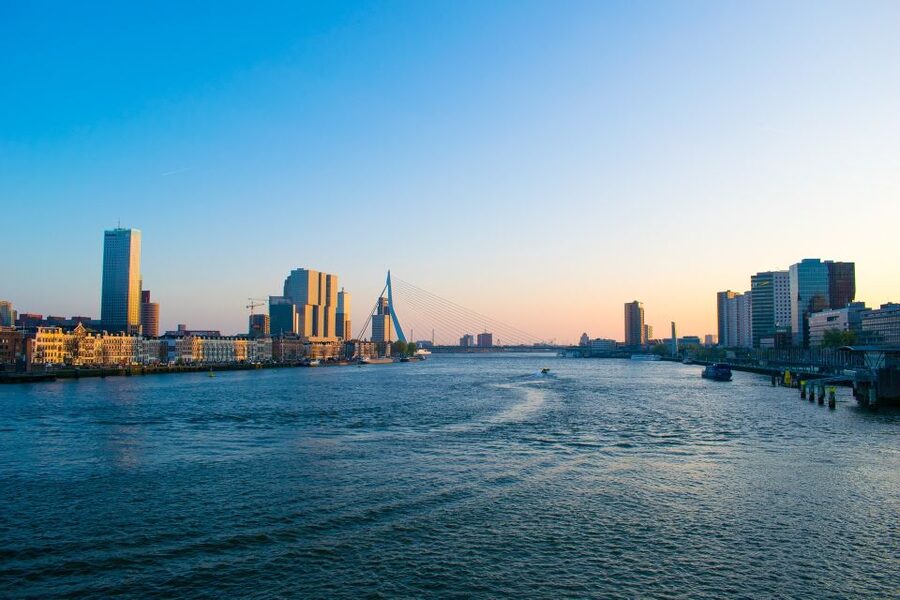
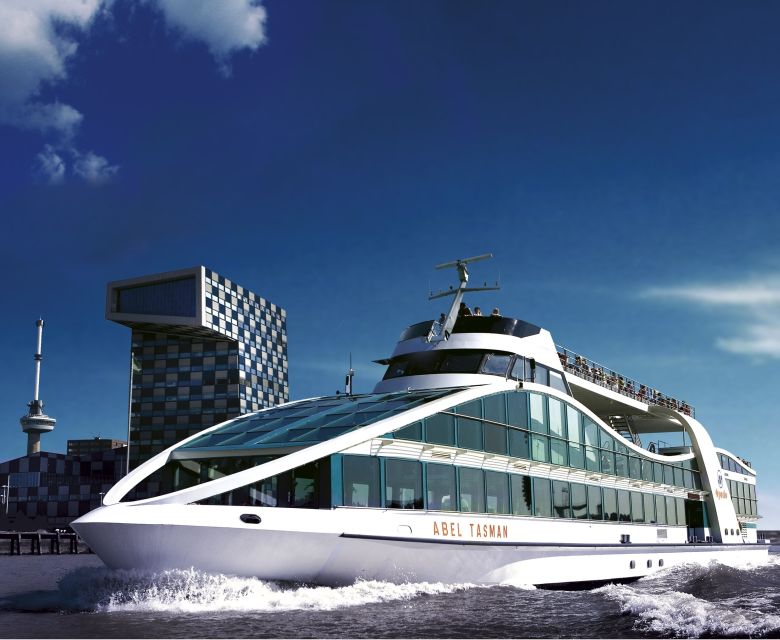
After roughly three hours of walking, the cruise provides a welcome change of pace. You spend 75 minutes on the water, looking back at Rotterdam from the harbor instead of walking through its streets.
This ending is well judged. The walking route gives you the city’s story and architecture at street level. The cruise lets you rest while taking in a broader view of the harbor and Rotterdam’s relationship with water and shipping.
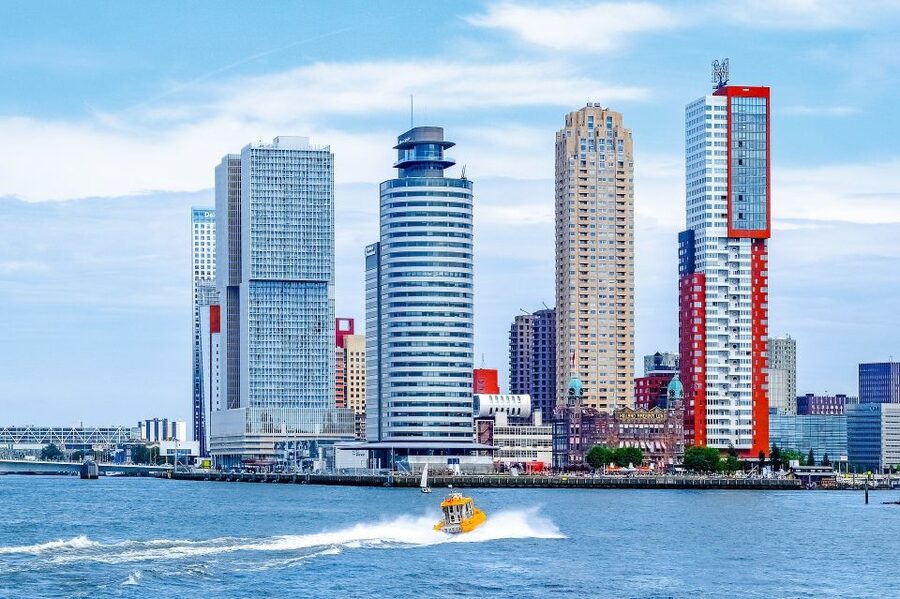
I would treat the boat ride as more than a relaxing add-on. After hearing how the city rebuilt itself, you get a chance to see the scale of that rebuilt city from the water. Buildings that seemed separate on foot can read as one large urban composition from the harbor.
The tour details describe a scenic cruise down the lovely harbor, but they do not specify the exact vessel, seating arrangement, or whether food and drinks are available. Food and beverages are not included, so plan to pay separately if they are offered onboard.
The timing also makes the cruise especially useful for anyone arriving by river ship. Beginning at a cruise ship and finishing with a harbor ride creates a natural connection between your visit and Rotterdam’s waterfront, though you should allow enough time for any return journey after the scheduled four hours.
Guide quality and language choices
The tour is private, with an experienced guide in your chosen language. English, German, Spanish, and Dutch are available.
The strongest praise has focused on the guides’ personal style. Niels has been described as welcoming, clear in English, and well informed about Rotterdam. Adrian received high marks for explaining the city’s history, architecture, and walking route while keeping the time moving so well that the tour seemed to pass quickly.
Ulla was singled out warmly, and Gerd Baas made a particularly strong impression on Petra and Bernd Wunderlich, who found his friendly manner a major part of their good memory of Rotterdam. These details matter because a private walk depends heavily on the person leading it.
You should still remember that guides differ in personality. The tour is a good fit if you enjoy asking questions and talking through what you see. It may be less appealing if you prefer to explore alone with an audio guide or spend long periods inside museums.
The high overall rating of 4.7 from 59 reviews supports the idea that guide quality is a major strength. More important than the number itself is the pattern in the comments: repeated praise for friendliness, clear English, and strong explanations of history and architecture.
Is $188 per person a fair price?

At $188 per person, this tour costs more than a standard shared walking tour. The comparison is not quite equal, since you receive a private guide, a three-hour city walk, and a 75-minute harbor cruise in one four-hour experience.
The price makes the most sense for couples, families, or small groups who value a private pace. It can also work well for cruise passengers with limited time, because the guide can meet you at a river ship and focus on the central sights without making you work out the route.
You are paying for convenience and interpretation, not just transportation or admission. The guide connects the cubic houses, wartime destruction, old harbor, surviving monuments, Market Hall, and cruise into one story. That can save you time and help you understand why Rotterdam looks so different from other Dutch cities.
The value is weaker if you are mainly looking for a cheap way to see the harbor. The cruise is only 75 minutes, and food, beverages, and gratuity are extra. You are also committing about three hours to walking, so this is not a simple sightseeing ride.
Free cancellation up to 24 hours before the start and reserve-now, pay-later booking add some useful flexibility. Still, the main decision should be based on your interest in architecture and city history, not on the booking terms.
Who should book this Rotterdam tour?
I would recommend it to first-time visitors who want a structured introduction to Rotterdam. It is also a strong choice for anyone interested in modern architecture, postwar city planning, or the way a port city rebuilt itself after severe destruction.
Cruise passengers are another natural match, especially if you can arrange a start at your ship and have four hours available. The combination of a central walking route and harbor cruise gives you two views of Rotterdam without requiring separate bookings.
Families may appreciate the cubic houses and Market Hall because both offer visual variety. The walking distance remains the main issue. Children or adults who do not enjoy three hours on foot may find the schedule tiring.
I would be more cautious about booking if you want extensive interior visits, museum time, or a long meal. The route is primarily outdoors, and the supplied details do not include museum admissions or a meal. Wear comfortable clothing and shoes, and avoid bringing heavy bags.
FAQ
How long does the Rotterdam walking tour and harbor cruise last?
The full experience lasts four hours. About three hours are devoted to the private walking tour, followed by a 75-minute harbor cruise.
Where does the tour begin?
The listed meeting point is The Destroyed City, the Ossip Zadkine statue at 3011 TK Rotterdam, Netherlands. The tour can also start at your hotel, river cruise ship, or Rotterdam train station.
What languages are available?
The private tour is available in English, German, Spanish, and Dutch.
Is the harbor cruise included?
Yes. A 75-minute harbor cruise is included in the tour.
Are food and drinks included?
No. Food and beverages are not included in the price. Gratuity is also separate.
How much walking is involved?
You should expect approximately three hours of walking. Comfortable shoes and clothing are advised, and heavy bags are best left behind.
Can I cancel the tour for a full refund?
Yes. You can cancel up to 24 hours in advance for a full refund. The tour also offers reserve-now, pay-later booking.
Should you book it?
Book this tour if you want Rotterdam explained, not simply photographed. The private guide, strong focus on architecture and wartime rebuilding, Market Hall visit, and 75-minute harbor cruise make it a well-rounded four-hour introduction.
I would skip it if you dislike long walks, want a low-cost group tour, or hope to spend most of the day inside museums and restaurants. For everyone else, especially cruise passengers and architecture fans, $188 buys a useful mix of local interpretation, central sights, and time on the harbor.
Just added around the world
- Wismar: Harbor Cruise with Sea Animal Fishing and Guide★ 4.6 · 22 reviews
- Yokosuka: Boat Trip to an Uninhabited Island★ 5.0 · 16 reviews
- Yokosuka : Scenic Hidden Gem Hike and Naval Port Cruise★ 5.0 · 13 reviews
- Vancouver: North Shore Food Tour with Harbour ride★ 4.3 · 2 reviews
- Victoria: Kayak Harbour Tour★ 4.8 · 8 reviews
- Wednesday Regatta with harbour tour★ 4.8 · 8 reviews
- Wellington 90 minute Harbour Cruise★ 5.0 · 6 reviews
- Valletta: 3 Cities Guided Tour & Grand Harbour Boat Tour★ 4.8 · 15 reviews
Harbour Walking Tours, compared.
Annapolis Historic Walking Tour at Harbor and Naval Academy
Read our review →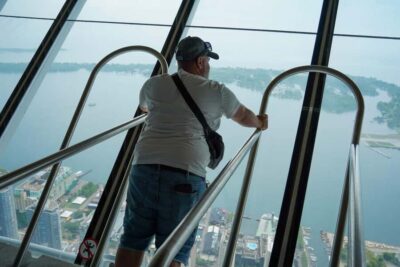
Toronto Downtown Walking Tour With Tower and Harbour Cruise
Read our review →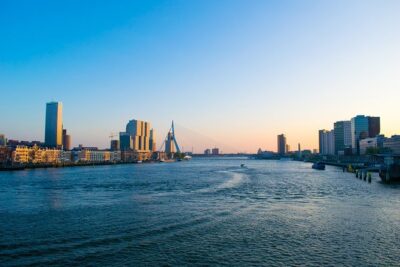
Private Tour: Rotterdam Walking Tour Including Harbor Cruise
Read our review →
Convicts & Castles: Goat Island Walking Tour Including Sydney Harbour Cruise
Read our review →

Browse the lists this tour appears in