
REVIEW · HARBOUR WALKING TOURS
Duisburg: Guided Walking Tour through the inner harbour
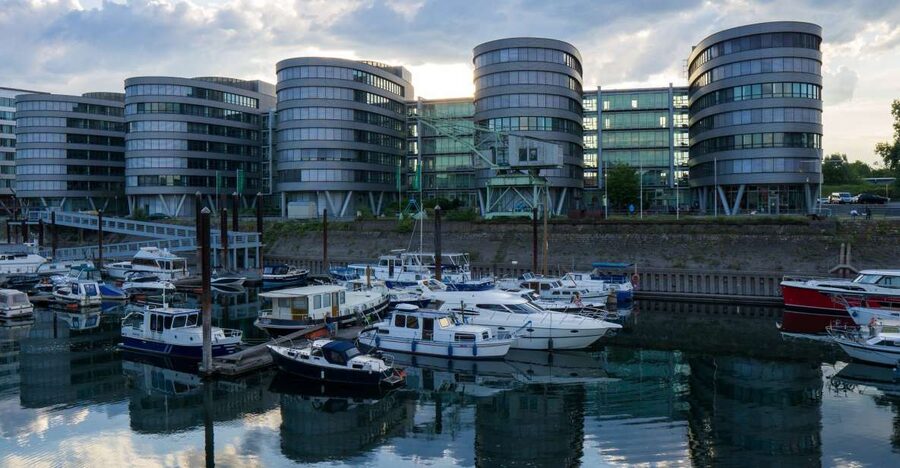
Duisburg’s waterfront has changed its cargo. This 1.5-hour walk shows how the former bread basket of the Ruhr became a stylish harbour district, with Five Boats, yachts, museums, restaurants, and bold new buildings. I like the sharp contrast between old warehouse rows and modern architecture, and I like that the tour explains the Norman Foster plan behind the change.
The main consideration is language: the live guide speaks German only. The walk also goes ahead in rain, so bring a waterproof jacket. Still, the low $16 price makes this an easy way to understand a part of Duisburg that is more interesting once you know what used to happen here.
Key points at a glance
- The harbour tells a clear story of industrial change: Grain handling once drove the area, but the decline of the mills forced Duisburg to rethink its waterfront.
- Norman Foster’s plan is central: You learn how a British architect’s vision helped shape the district from the mid-1990s onward.
- Old and new sit side by side: Nostalgic warehouse rows share the water with modern buildings, including the Five Boats complex.
- The setting changes from working port to leisure district: Freighters have given way to yachts, restaurants, cultural venues, and events.
- It is an informative, good-humored walk: Feedback specifically praises the guide’s useful explanations and friendly humor.
- You can easily add a museum visit: Küppersmühle and the Cultural and Urban History Museum give you worthwhile options before or after the walk.
Why Duisburg’s inner harbour is worth your time
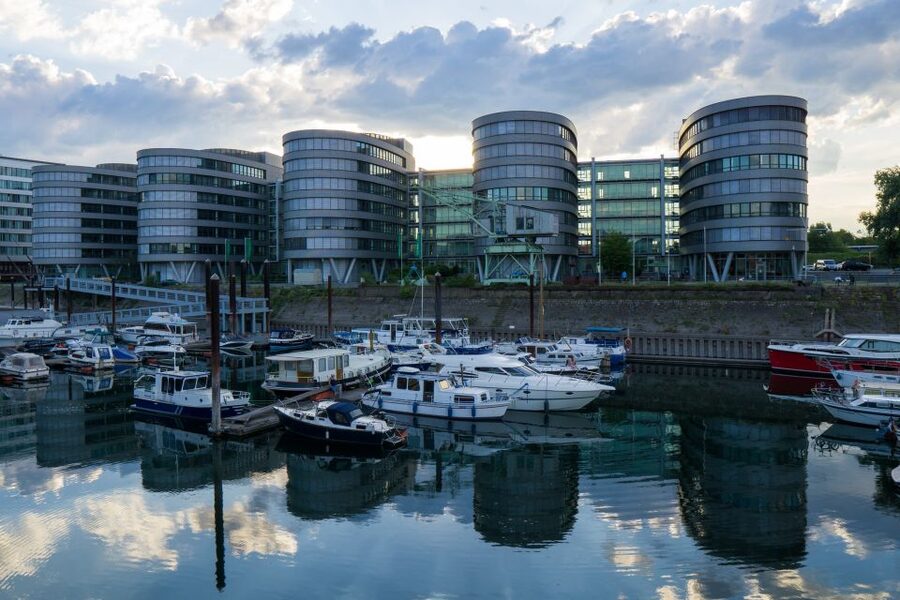
Duisburg is best known as an industrial city, and its inner harbour makes that identity easy to understand. This was not originally a place designed for strolling, dining, or admiring architecture. It was a working waterway where grain was moved in huge quantities.
The nickname bread basket of the Ruhr area points to the harbour’s former role. Grain mills and related businesses handled the food supply for one of Germany’s most heavily industrialized regions. By the end of the 1960s, the mills were declining, and the old harbour economy was losing its purpose.
That created a serious problem. A waterfront built around freight traffic cannot simply wait for its old business to return. Duisburg had to decide what to do with the water, the warehouses, and the nearby land.
This tour is useful because it explains that change while you look at the results. Instead of seeing a few handsome buildings without context, you can connect the marina, restaurants, offices, museums, and public spaces to a larger urban plan.
More Waterfront Walking Tours in Germany:
- Hamburgs Highlights: Harbor Cruise & Reeperbahn Walking Tour
★ 5.0 · 5 reviews - Rotterdam Walking Tour and Harbor Cruise
★ 4.7 · 59 reviews - Reykjavik Food Tour – Old Harbor Walking Tour
★ 5.0 · 41 reviews
Meeting at the Mercator Fountain
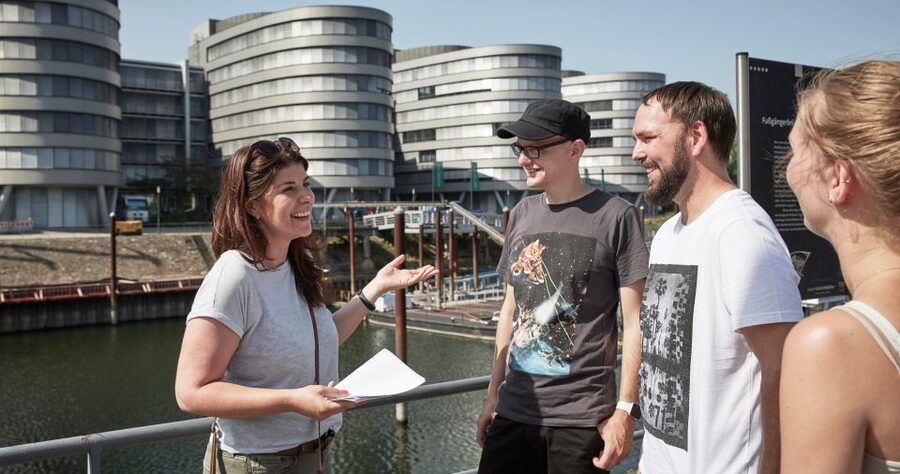
The tour begins in front of the Mercator Fountain, outside Duisburg’s town hall. That is a practical meeting point in the city center, and it gives you a clear place to find the guide before the walk begins.
You should allow a few minutes to arrive early. The tour lasts about 90 minutes, and the time is spent walking and listening rather than stopping for a long meal or museum visit.
The guide speaks German. If you understand German well, you can expect a live explanation of the harbour’s past and its later redevelopment. If you do not speak German, the architecture and waterfront setting are still visible, but the main value of the tour is the spoken background, so language ability matters here.
The walk is wheelchair accessible. That makes it a practical choice for visitors who want to see the harbour without signing up for a demanding outing. Exact walking conditions can vary with weather, but the activity is planned as an accessible guided walk.
From grain port to new city district
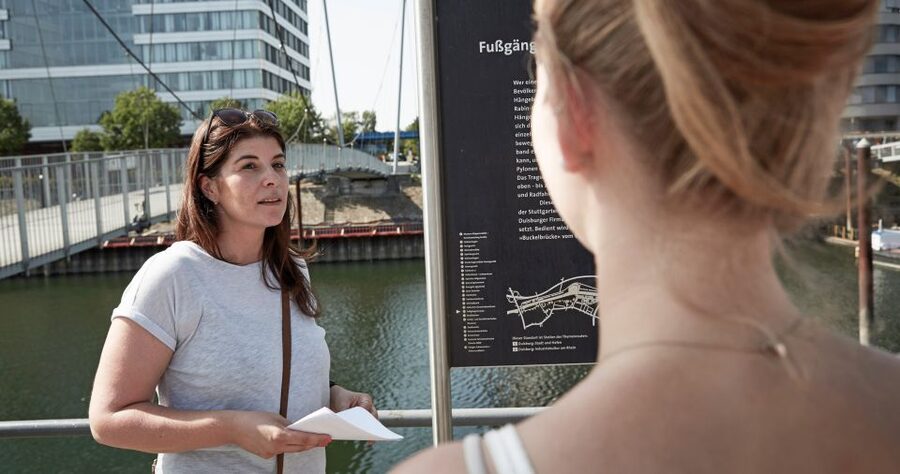
One of the strongest parts of the walk is the explanation of why the inner harbour had to change. The decline of the grain mills was not a small business shift. It threatened the purpose of the entire district.
That gives the modern waterfront more meaning. Yachts at anchor are not simply decorative additions. They show that the harbour has moved from freight handling toward leisure, culture, offices, and dining.
You will hear about the plan associated with British architect Sir Norman Foster, which helped guide the redevelopment from the mid-1990s. The important point is not just the architect’s name. It is the way the plan brought different uses together, including offices, cultural sites, restaurants, and public areas near the water.
I find this kind of explanation more useful than a tour that only points out attractive buildings. You learn to read the district as a piece of urban planning. The waterfront is a practical example of structural change, not a frozen industrial relic.
Five Boats and the modern waterfront
The Five Boats is one of the modern architectural landmarks you pass along the route. Its name and design make it an easy feature to remember, and it represents the newer face of the harbour.
The building is part of a broader mix of modern offices and public spaces. You can compare its clean, contemporary appearance with the older warehouse rows nearby. That contrast is one of the visual pleasures of the walk.
The tour does not treat modern architecture as decoration alone. It places these buildings in the story of Duisburg’s attempt to bring activity back to the harbour. New offices helped give the area a weekday purpose, while restaurants, museums, and events helped make it useful beyond working hours.
For you, this means the tour has something to offer even if you are not an architecture specialist. The guide connects shapes and buildings to the practical question of how a city reuses old industrial land.
More Guided Tours in Germany:
- Wismar: Harbor Cruise with Sea Animal Fishing and Guide
★ 4.6 · 22 reviews - Seattle’s Original Guided Harbor Cruise
★ 4.5 · 2,077 reviews - Rotterdam: Harbor Cruise with Live Guide
★ 4.0 · 1,270 reviews - Seattle: Harbor Cruise with Local Guide
★ 4.8 · 599 reviews
Yachts, restaurants, and a change in mood
The marina gives the inner harbour a very different feel from the old freight port. Where cargo ships once loaded and unloaded, yachts now sit at anchor. The water remains central, but the mood has changed from work to leisure.
Restaurants along the waterfront add to that relaxed atmosphere. You can use them before or after the walk, perhaps staying for a meal or a drink while looking back at the buildings you have just seen.
This is also where the tour’s balance matters. The inner harbour is not presented only as an old industrial site, and it is not reduced to a restaurant quarter. You see how both identities share the same water.
The phrase Mediterranean atmosphere appears in the description of the area, and you can understand why. Yachts, outdoor dining, and water views create a softer mood than the harbour’s former grain trade. Still, the warehouse buildings and industrial past keep the setting tied to Duisburg.
Warehouse rows and cultural buildings
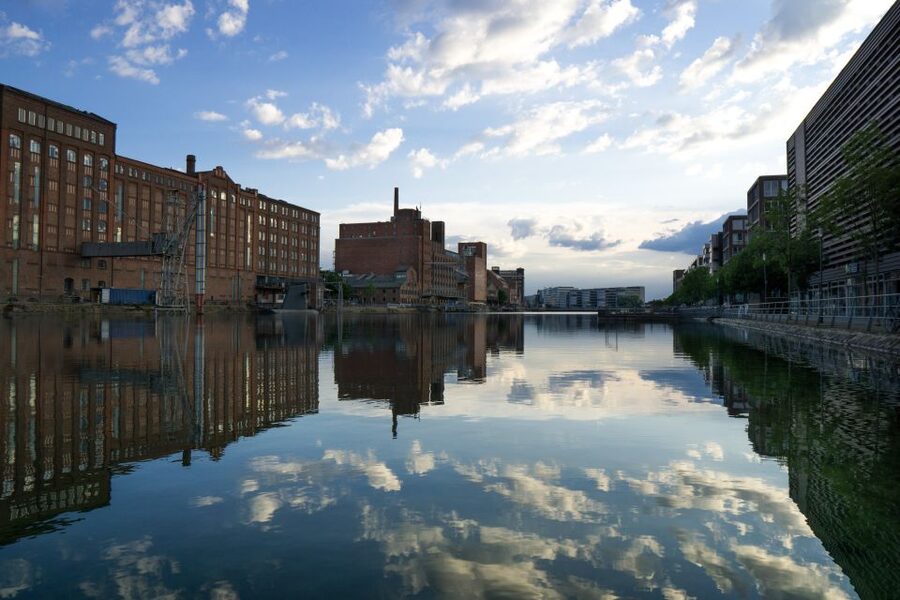
The older warehouse rows provide an important counterpoint to the modern offices. Their presence helps you picture the former working harbour, even though their role has changed.
The tour also passes museums and cultural venues, giving the district a reason to visit during the day. The Küppersmühle Museum of Modern Art is especially worth adding if you enjoy modern art. Its location by the harbour makes it a natural companion to the walking tour.
The Cultural and Urban History Museum offers a different focus. It can help you place the harbour within Duisburg’s wider story, rather than looking at the waterfront as an isolated project.
You should not try to squeeze both museums into the 90-minute walk. The better plan is to treat the tour as your orientation, then choose one museum afterward if your schedule allows. The walk explains the physical setting, while a museum visit can give you more time with art or city history.
What the guide adds
The tour’s strongest quality is its explanation. You are not simply sent from one attractive view to another. The guide describes why the harbour declined, why redevelopment became necessary, and how the district gained its current mix of uses.
The tone also appears to be a strength. Feedback praises the tour as informative and humorous, which is a useful combination for a subject that could otherwise become a dry lecture about planning policy.
That humor matters on a walking tour. You are standing outdoors, moving between several sites, and taking in a lot of information in a short time. A friendly guide can make the story easier to follow and remember.
The tour has also proved manageable in poor weather. One August outing went ahead despite bad weather, and the good mood of the guide helped the group enjoy it. Do not mistake that for a reason to skip rain gear. The tour operates in rain, but your comfort will depend on a coat and suitable shoes.
How much value do you get for $16?
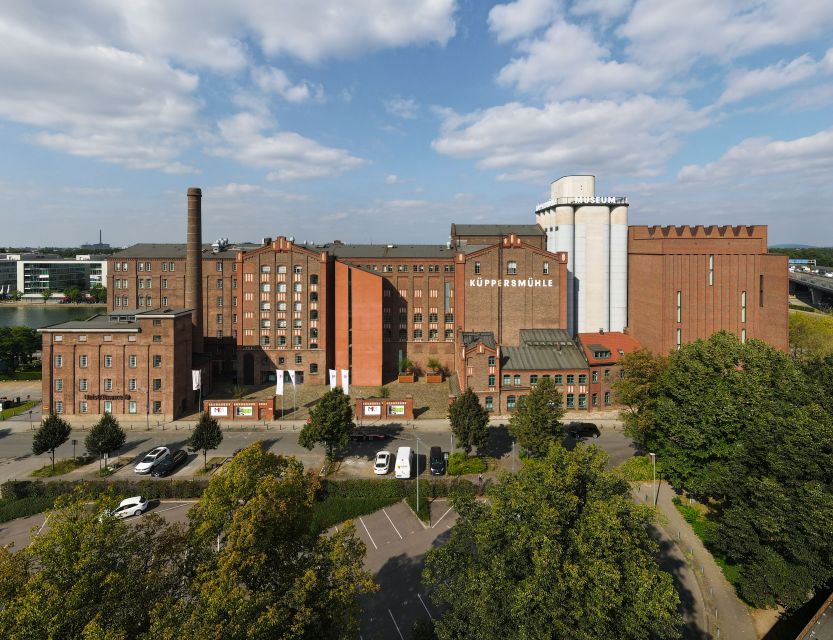
At $16 per person, this is a strong-value introduction to the inner harbour. The price is modest for a live 90-minute tour, especially because the experience gives you context that would be hard to gather by walking around alone.
You are paying for interpretation, not entry to a museum, a meal, or a boat trip. That distinction matters. If you want a full day of attractions included in one ticket, this is not that kind of activity.
The value improves if you pair it with a museum visit or a meal at the harbour. The tour helps you decide what deserves a closer look, while the surrounding museums and restaurants let you continue at your own pace.
It is also a good option at the beginning of a Duisburg visit. After the walk, you will have a better sense of where the harbour’s main features fit together and why the district looks the way it does.
Who should book this walk?
I would recommend it most to first-time visitors who want a short introduction to Duisburg’s inner harbour. It suits people who enjoy architecture, city planning, industrial history, or the practical story of how old port districts find a new purpose.
It is also a good choice for anyone with limited time. Ninety minutes is long enough to gain real context but short enough to fit around a museum, lunch, or other city plans.
Families and mixed-age groups may appreciate the variety. There are boats, water, modern buildings, old warehouses, museums, and places to eat, so the setting offers more visual change than a talk focused on one monument.
You should think twice if you do not understand German. The tour is listed with a German-speaking guide, and translation is not included. You should also avoid expecting a private architectural consultation or a food tour. This is a public walking tour focused on the harbour’s transformation.
Practical advice before you go
Wear comfortable shoes. The walk lasts 1.5 hours, and you will be outside for the whole activity.
Check the starting time when you book, since several departure times may be available. Meet the guide at the Mercator Fountain in front of the town hall, not at one of the museums or restaurants by the water.
Plan around the weather. The walk takes place in rain, so a waterproof layer is sensible even if the forecast looks uncertain. A dry day will make it easier to linger by the marina and enjoy the waterfront after the formal tour.
If you want to visit Küppersmühle or the Cultural and Urban History Museum, check their opening details separately. The walking tour does not include museum admission.
Should you book the Duisburg inner harbour tour?
Book it if you want a clear, affordable explanation of Duisburg’s waterfront change. The combination of grain-port history, Norman Foster’s redevelopment plan, modern architecture, warehouse rows, yachts, and restaurants gives you a useful picture of the district in only 90 minutes.
Skip it if you need an English-language tour or prefer to explore without a guide. For German speakers, the low price and praised informative, humorous style make this a sensible addition to a Duisburg visit. Add a museum or harbour meal afterward, and the short walk becomes a fuller half-day plan.
FAQ
How long does the Duisburg inner harbour tour last?
The guided walking tour lasts 1.5 hours.
How much does the tour cost?
The listed price is $16 per person.
Where does the tour meet?
The guide waits in front of the Mercator Fountain, in front of Duisburg town hall.
What language is the tour in?
The live tour guide speaks German.
Is the tour wheelchair accessible?
Yes, the tour is wheelchair accessible.
Does the tour operate in rainy weather?
Yes, the tour also takes place when it is raining. Bring suitable rain protection.
What will I see during the walk?
You will see the inner harbour, the Five Boats, the marina, modern buildings, museums, restaurants, and older warehouse rows.
What is the Norman Foster plan mentioned on the tour?
The tour explains Sir Norman Foster’s plan that helped change the inner harbour from the mid-1990s.
Can I cancel the booking for a full refund?
Yes, you can cancel up to 24 hours in advance for a full refund. You can also reserve now and pay later.
Just added around Germany
- Wismar: Harbor Cruise with Sea Animal Fishing and Guide★ 4.6 · 22 reviews
- Wednesday Regatta with harbour tour★ 4.8 · 8 reviews
- Hamburg harbor tour with a barge★ 5.0 · 24 reviews
- Yacht Sailing After Work Tour of Hamburg Harbor★ 5.0 · 13 reviews
- Sailingyacht-Event “Cruise in the City” – unique harbor tour!★ 5.0 · 7 reviews
- Rostock: Hot Rod Harbor City Tour★ 4.9 · 16 reviews
- Hamburg: Line C Sightseeing Tour Hop On Hop Off and Harbor Cruise★ 3.7 · 8 reviews
- Hamburgs Highlights: Harbor Cruise & Reeperbahn Walking Tour★ 5.0 · 5 reviews
Harbour Walking Tours, compared.
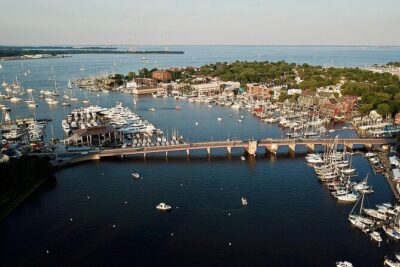
Annapolis Historic Walking Tour at Harbor and Naval Academy
Read our review →
Toronto Downtown Walking Tour With Tower and Harbour Cruise
Read our review →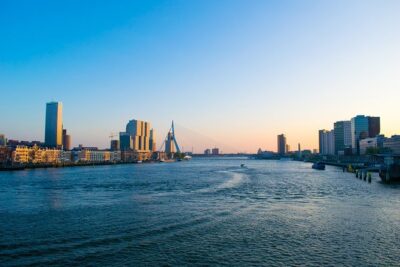
Private Tour: Rotterdam Walking Tour Including Harbor Cruise
Read our review →
Convicts & Castles: Goat Island Walking Tour Including Sydney Harbour Cruise
Read our review →
Browse the lists this tour appears in