
REVIEW · DARWIN HARBOUR CRUISES
Darwin Combo: The Bombing of Darwin Experience & Darwin Harbour Cruise
Darwin’s wartime story comes alive on the water. This two-part experience combines a fast, one-hour harbour cruise with the Royal Flying Doctor Service tourist facility, where film, holograms, and virtual reality explain the Japanese attacks on Darwin in February 1942. I like the way the cruise connects real harbour landmarks with the story, and I like that the second attraction sits close by at Stokes Hill Wharf.
The family-friendly format is another strong point. Children can follow the visual displays and enjoy the boat ride without facing a long, tiring excursion. The main caution is organization: one booking issue left a guest frustrated when the cruise operator did not initially have the full combination booking. Keep your phone ticket handy and allow time between the two parts.
You should plan roughly two to four hours, depending on how long you spend at the RFDS facility and how the cruise schedule fits your day. At $60.97 per person, the price is fair if you want both attractions, especially since buying them together saves you from arranging two separate visits.
Five things to know before you go
- The cruise visits real wartime locations: You pass the wreck sites of the SS Neptuna and USS Peary, the old flying boat base at Doctors Gully, the oil tanks, HMAS Coonawarra, and the Emery Point gun emplacement.
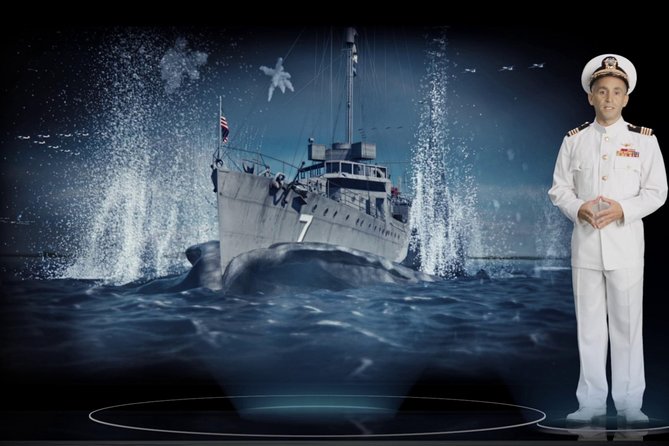
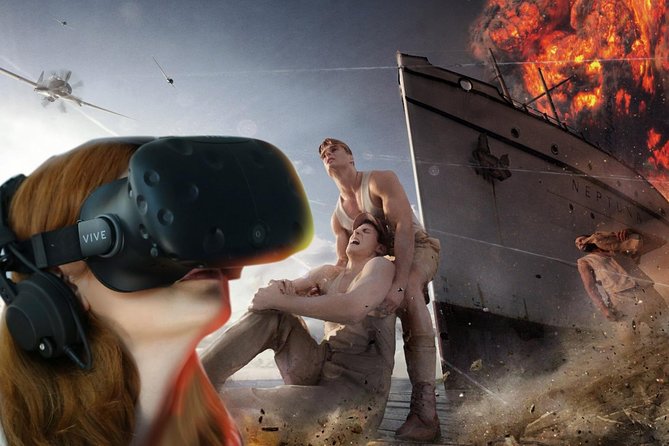
- The RFDS visit uses strong visual storytelling: Holographic scenes and an eight-minute virtual reality presentation help explain what the bombing looked and felt like.
- Both attractions begin at Stokes Hill Wharf: You do not need to make a long transfer between the boat and the tourist facility.
- The boat is more than a scenic ride: Guides explain the attacks and point out the harbour sites connected to Darwin’s wartime role.
- Allow at least 90 minutes for the RFDS section: The centre is compact, but the interactive displays and presentations deserve more than a quick walk-through.
Why Darwin’s wartime story matters
Darwin is often introduced through its tropical climate, waterfront, markets, and access to the Top End. The city’s role in World War II can be overlooked, even though Darwin was attacked by Japanese forces in February 1942.
This experience gives you a clear introduction without asking you to read long panels in a traditional museum. You see the places connected to the attacks, then use modern presentation tools to understand what happened. That order works well because the cruise gives you a physical sense of the harbour before the indoor displays add detail.
I especially like the way the experience corrects a common gap in Australian history. Several people arrive without realizing that Darwin was bombed during World War II. The tour makes that fact easy to grasp, while also showing that the attack was not an abstract event from a textbook. Ships were hit, harbour areas were affected, and the city became a military target.
The tone is educational rather than light entertainment, but the fast boat and outdoor setting keep the experience from feeling heavy throughout. Guides add the human element through spoken commentary, stories, and details that may not appear in a standard city tour.
A few more boat trips around Australia worth a look
- Sydney Harbour Sunset Dinner Cruise from Darling Harbour
★ 4.0 · 1,122 reviews - Wineglass Bay Cruise from Coles Bay
★ 4.5 · 982 reviews - Sydney: Harbour Dinner Cruise with 3, 4 or 6-Course Menu
★ 4.4 · 925 reviews
Starting at Stokes Hill Wharf with Sea Darwin
Your day starts with Sea Darwin at Dock 2, Stokes Hill Wharf. The boat returns to this same point, so you do not need to arrange a second pickup or work out a complicated end point.
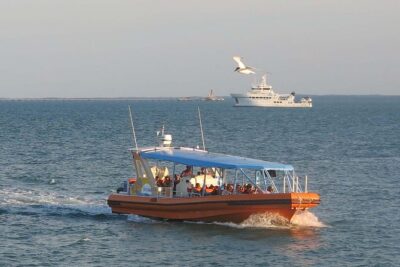
The one-hour cruise covers the historic waterfront and nearby harbour areas. You pass the Pearling Luggers, the oil tanks, the wreck sites of the SS Neptuna and USS Peary, and the old flying boat base at Doctors Gully. The route also includes HMAS Coonawarra and the Emery Point gun emplacement.
These locations give the commentary a useful sense of place. Instead of hearing a general account of the bombing while sitting indoors, you look toward the areas linked to the story. The wreck sites are particularly important because they help show the scale and danger of the attacks around the harbour.
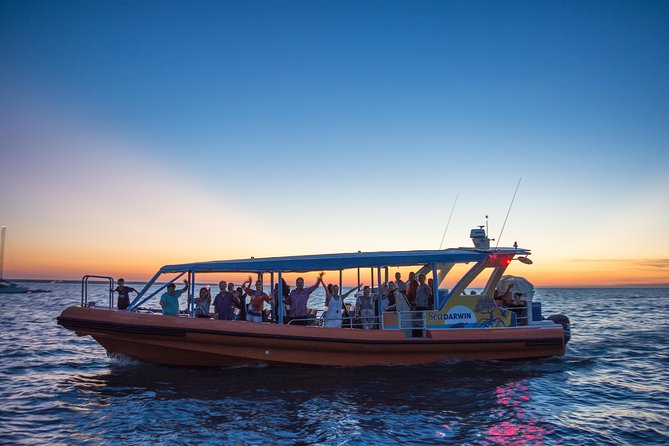
The cruise also offers a change of pace. The boat is described as comfortable and fast, and several comments praise the lively ride as well as the information from the guide. You might even see dolphins, although that is an extra possibility rather than a promised feature.
The quality of the spoken commentary matters here. Adrian, Meg, Tim, and Jim have all been associated with warm, informative guiding on this experience. Guides explain the setting through a microphone and point out the sites as you pass. Some people praise the clear, easy-to-follow storytelling, while one complaint concerned confusion over the combined booking at the cruise operator. That problem appears to have been referred to management, but it is still sensible to arrive with your mobile confirmation ready.
The boat portion depends on conditions. The operator states that poor weather can lead to a new date or a full refund. On a fine day, the water, open views, and boat movement add real appeal. In bad weather, the cruise may not be available, so keep your schedule a little flexible.
Seeing the wreck sites from the harbour
The cruise is not a substitute for a full military museum, and you should not expect a long stop at each location. The value comes from seeing several important points in one hour while a guide explains their connection to the bombing.
The SS Neptuna and USS Peary wreck sites are among the most significant points on the route. You may not get the same detail you would from a dedicated historical exhibition, but the boat helps you picture the harbour as an active wartime zone.
The old flying boat base at Doctors Gully adds another layer to the story. The oil tanks, gun emplacement, and naval facilities show that Darwin was not simply a remote town caught in an isolated incident. The harbour supported fuel, ships, aircraft, and defence positions.
I would treat the cruise as the narrative introduction. Listen closely, look toward the places the guide identifies, and save the indoor displays for the more detailed explanation. If you only want a general harbour outing, the wartime focus may feel narrow. If you want to understand Darwin’s role in the conflict, the route gives you useful context quickly.
Entering the RFDS Darwin Tourist Facility
The second part takes place at the Royal Flying Doctor Service tourist facility, also near Stokes Hill Wharf. This is convenient, but the close location does not mean you should rush through it.
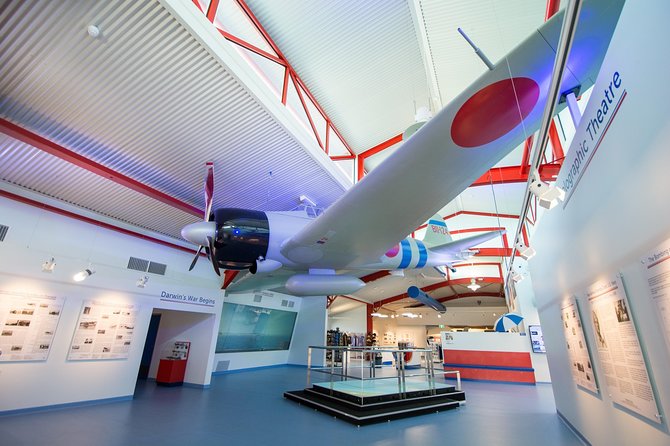
The facility combines RFDS material with the Bombing of Darwin presentation. Holographic scenes help set the period, and an eight-minute virtual reality experience recreates the bombing of Darwin Harbour. The presentation includes striking visual moments, including a soldier’s hat sinking toward the sea floor and poppies appearing in the scene. Those touches give the presentation an emotional edge without requiring a long film.
The VR section is the centrepiece for many people. It turns the story into something you watch from within the action rather than simply read about. You can see the harbour brought to life, follow the attack through a short presentation, and connect the images to the places you just passed by boat.
The RFDS exhibits add a second subject, so this is not only a war display. You get an introduction to the Royal Flying Doctor Service alongside the wartime material. That combination broadens the visit and makes the facility useful for families with different interests.
The building itself is not large. If you expect a major museum with room after room of collections, you may find the space small. The holograms, films, and interactive elements make up for that limitation, but you should set your expectations correctly.
Allow at least 90 minutes for this part if you want to see the displays rather than simply complete the VR presentation. The total duration listed for the experience ranges from two to four hours because your timing depends on the cruise schedule and the amount of time you spend inside.
Same waterfront, a different kind of trip:
- 30-Minute Sydney Harbour Jet Boat Ride on Thunder Twist
★ 5.0 · 841 reviews - Sydney: Harbour Cruise with Buffet Lunch
★ 4.7 · 804 reviews - Sydney Harbour Starlight Dinner Cruise from Darling Harbour
★ 4.0 · 774 reviews - Taronga Zoo Entry & Return Ferry – Sydney Harbour
★ 4.5 · 722 reviews
Why the two parts work well together
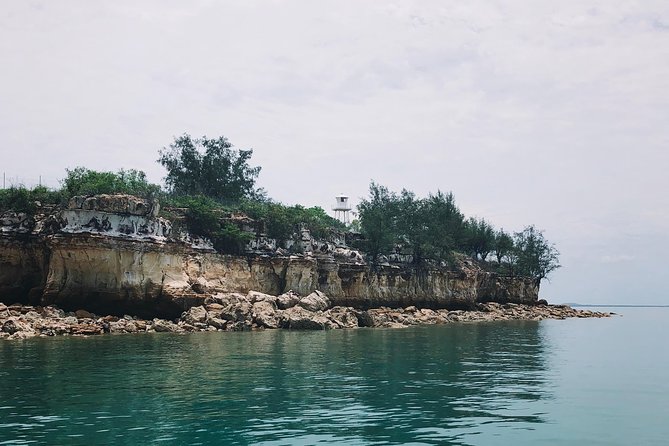
The cruise and RFDS facility cover the same subject in different ways. The boat gives you geography. The indoor presentation gives you atmosphere and visual detail.
That pairing is the main reason I think the combination is better than either attraction alone. On the water, you pass the areas affected by the attacks. Inside, the VR and holographic presentations help you imagine the confusion, danger, and human cost.
The order may vary around your schedule, but the attractions are designed to fit into the same visit. If you take the boat first, the indoor presentation can add detail to the landmarks you have just seen. If the facility comes first, the cruise gives you a chance to locate the scenes in the real harbour.
The experience also works well for mixed-age groups. Children may respond more readily to the boat and VR than to a conventional history talk. Adults can focus on the military and local details. Everyone has a shared subject to discuss between the two stops.
Still, the presentation is compact. If you are a serious World War II specialist, you may want additional reading or a separate museum visit. This tour gives you a strong overview and memorable visual context, but it cannot cover every aspect of the campaign in a few hours.
Price, timing, and practical value
The listed price is $60.97 per person. That includes the one-hour Bombing of Darwin cruise and entry to the RFDS Darwin Tourist Facility. Food, drinks, hotel pickup, and hotel drop-off are not included.
For the price, I think the combination offers good value if you want both history and a harbour outing. You are paying for a guided cruise, admission to the indoor facility, and a modern VR presentation without arranging separate bookings.
The value is strongest when you have a half-day available. You get a scenic boat ride, local commentary, wartime landmarks, RFDS exhibits, holographic displays, and virtual reality in one central area. It is also useful on a final day in Darwin because one person found it easy to fit in before heading to the airport.
Do not book it if you want a fully open-ended harbour cruise with no historical focus. The route and commentary are built around the bombing of Darwin. Also, do not assume the tour includes a meal or transport from your accommodation.
You receive confirmation when booking, and mobile tickets are accepted. Save the ticket to your phone before arriving. Children must be accompanied by an adult, and the maximum group size is 30 people. The activity is near public transportation, and most people can participate.
Who will enjoy this Darwin combination
I would recommend it to families, first-time visitors to Darwin, history fans, and anyone who wants an activity that works in hot weather without requiring a long walk.
It is also a good fit for people who prefer guided context. You do not need to research every harbour landmark in advance. The guide connects the places, ships, and military facilities as you pass them.
The tour suits cruise passengers and people with limited time because both attractions are at Stokes Hill Wharf. It can also work for a final morning or afternoon, although you should leave a sensible buffer before a flight.
You may want to choose something else if you dislike boats, virtual reality, or war history. The indoor centre is not a large museum, so those looking for a full day of artefacts and galleries may find the visit brief.
Booking advice and cancellation terms
Free cancellation is available if you cancel at least 24 hours before the experience starts. Changes or cancellations inside that 24-hour window are not accepted for a refund.
The cruise requires suitable weather. If the operator cancels because of poor conditions, you can receive a different date or a full refund. The same general choice applies if the minimum number of participants is not reached.
Because one booking problem has been reported at the cruise check-in, I would arrive with the confirmation showing the full Darwin Combo details. If staff initially seem to know only about the boat or only about the RFDS entry, show the mobile ticket and ask them to confirm both parts before departure.
Should you book the Darwin Combo?
Yes, if you want a practical introduction to Darwin’s World War II story and enjoy learning through places, images, and live commentary. The cruise gives you the harbour setting, while the RFDS facility supplies the most powerful visual material.
I would book it especially for a family, a short Darwin visit, or a day when you want two central attractions without arranging separate transport. The only real cautions are the compact size of the indoor centre, the weather dependence of the boat, and the need to double-check your combined booking at the wharf.
At $60.97, the package earns its price when you give the RFDS facility enough time. Treat it as a connected history experience rather than a quick boat trip with a small museum attached, and you will get much more from the visit.
FAQ
Where does the Darwin Combo begin?
It begins at Sea Darwin, Sea Tiwi, Dock 2, Stokes Hill Wharf, Darwin City, Northern Territory.
Where does the experience end?
The activity ends back at the starting meeting point at Stokes Hill Wharf.
How long does the full experience take?
The total duration is approximately two to four hours. The cruise lasts one hour, while the RFDS visit is listed at about two hours.
What does the ticket include?
The ticket includes the one-hour Bombing of Darwin cruise and entry to the RFDS Darwin Tourist Facility.
Is food included?
No. Food and drinks are not included in the ticket price.
Is hotel pickup included?
No. Hotel pickup and drop-off are not included.
Can I use a phone ticket?
Yes. You can download the ticket to your phone, so a paper ticket is not required.
Are children allowed?
Yes. The cruise and VR experience are suitable for children, but children must be accompanied by an adult.
How many people can join the activity?
The experience has a maximum group size of 30 people.
What happens if bad weather cancels the cruise?
You will be offered a different date or a full refund if the operator cancels because of poor weather.
Can I cancel for a full refund?
Yes, if you cancel at least 24 hours before the experience start time. Cancellations made less than 24 hours in advance are not refunded.
Just added around Australia
- Sydney Harbour – Sailing Hands-On Experience★ 5.0 · 22 reviews
- Twilight Treasures Sunset Sydney Harbour Cruise★ 5.0 · 4 reviews
- Sydney Harbour Twilight Cruise★ 5.0 · 13 reviews
- Whale Watching & Hop On Hop Off Sydney Harbour Explorer Cruise★ 4.0 · 2 reviews
- Sydney Harbour Sailing Experience★ 4.5 · 32 reviews
- Sydney Harbour Sail Like a Local Lunch Tour★ 5.0 · 4 reviews
- Taronga Zoo & Whale Watching Cruise Combo – Sydney Harbour★ 4.5 · 15 reviews
- Sydney Harbour: 2h Glass Boat Dinner Cruise with Wine Pairing★ 3.0 · 5 reviews
Darwin Harbour Cruises, compared.
Darwin Harbor Sunset Cruise with Buffet Dinner
Read our review →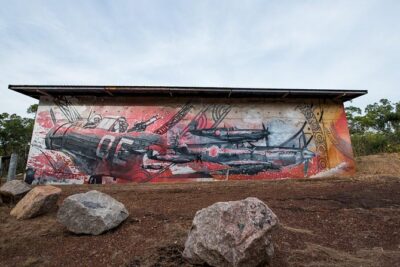
Bombing of Darwin World War II Tour with Harbour Cruise
Read our review →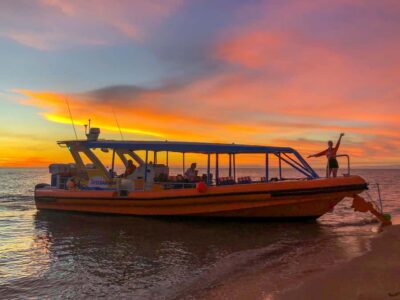
Sunset Harbour Cruise with Fish and Chips Dinner
Read our review →
Browse the lists this tour appears in