
REVIEW · HARBOUR LIGHTS NIGHT CRUISES
Harbor Lights and Sights Cruise
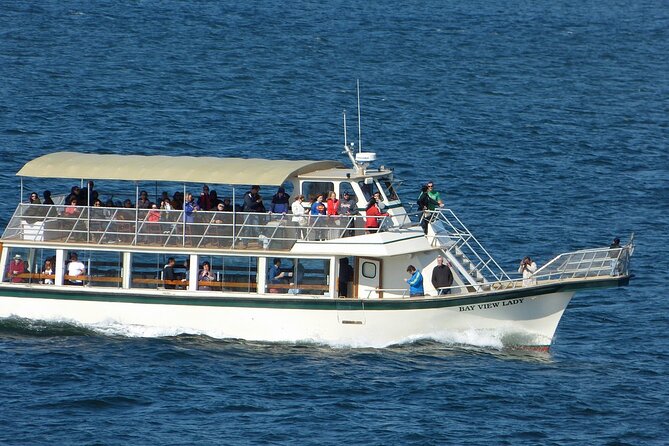
Portland looks better from the water. The Harbor Lights and Sights Cruise gives you a relaxed 1-hour-45-minute ride through Portland Harbor, with lighthouses, Civil War forts, islands, and a running lesson in Maine’s maritime past. I especially like the mix of excellent scenery and local storytelling, plus the onboard bar, snacks, and restrooms. The main drawback is simple: wind, cold, fog, or choppy water can limit the views.
I also like the modest group size, capped at 80 people, and the way the cruise works for families, couples, and solo sightseers. Guides such as Mark and Carl have brought personal local knowledge and humor to the narration. For the best photos, arrive early, aim for the upper deck, and sit on the right side when facing the front of the boat.
Key details at a glance
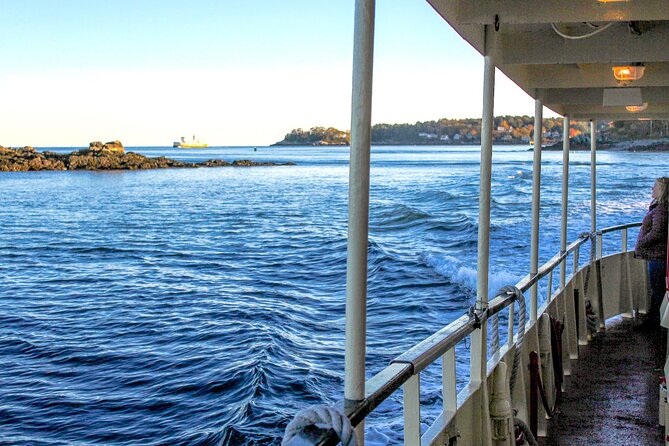
- A 1-hour-45-minute route through Casco Bay: You get enough time for several lighthouses, islands, forts, and harbor views without giving up an entire day.
- George Washington’s lighthouse connection: One stop is Maine’s oldest lighthouse, commissioned during Washington’s presidency and now one of the state’s most photographed sights.
- Four or more lighthouse views: The exact number you see depends on weather and visibility, but the cruise passes several historic lights.
- Local guides add real character: Mark, a lifelong Portland resident, has been praised for mixing history, personal stories, and humor.
- The upper deck is the best photo spot: It is limited to about 50 people, so getting in line roughly 30 minutes before boarding can help.
- Comforts that matter on the water: There is a bar, snacks, and a restroom onboard, useful on a cruise lasting nearly two hours.
Why Portland Harbor is best seen from a boat
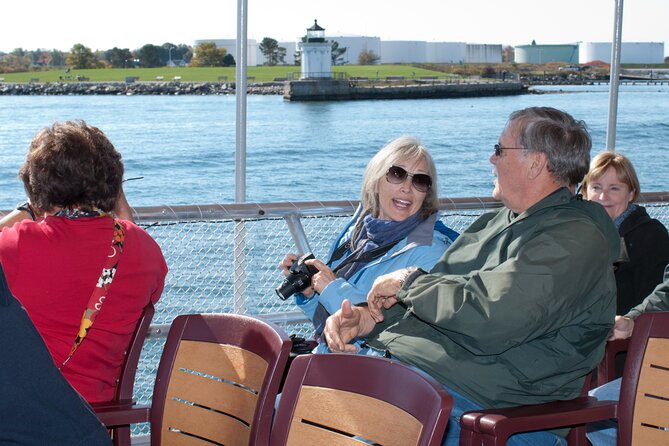
Portland’s waterfront can feel like a working edge of town when you walk along Commercial Street. From the boat, the view changes. You see the harbor as a network of channels, ledges, islands, working boats, and navigation lights that guide ships toward the city.
That wider view helps explain Portland’s past. The city’s story is tied to shipping, fishing, defense, and the difficult waters around Casco Bay. Instead of looking at one lighthouse from a parking area, you see why it was built where it was built. A light on a rocky ledge is no longer just a pretty subject for a photo. It becomes part of a system that helped vessels reach Portland safely.
The cruise leaves from 170 Commercial Street, right in Portland. It returns to the same place, so you do not need to arrange separate transportation at the end. The mobile ticket makes boarding simple, and confirmation is provided when you book.
At $54 per person, this is not the cheapest harbor ride you will find. Still, the price covers nearly two hours on the water, a narrated route, several historic sights, and access to a comfortable boat with basic refreshments. I see it as good value if you want an overview of Portland and Casco Bay in one sitting. It is less compelling if your main goal is to visit a lighthouse interior or spend time ashore at an island.
More Night Cruises in the USA
- NYC: Circle Line 2h Harbor Lights Cruise Skip-The-Box-Office
★ 4.6 · 8,222 reviews - Circle Line: 2hr – New York City Harbor Lights Cruise
★ 4.5 · 2,859 reviews - Clearwater Beach: Sunset and Harbor Lights Cruise
★ 4.8 · 204 reviews
The first lighthouse: Washington, history, and a classic Maine view
One of the strongest moments on the route is the view of Maine’s oldest lighthouse. It was commissioned by George Washington, which gives the stop an immediate connection to the early years of the United States.
The lighthouse is also one of the most photographed in the country. From the water, you get the view that postcards tend to favor: the tower set against open water, rocky shore, and the wider harbor. The boat’s position gives you a chance to see the structure in relation to the coastline, not just as a single building.
This is the kind of sight that benefits from a clear day. In poor weather, the lighthouse may still be visible, but the distant islands and shoreline details can fade. If photography matters to you, keep your phone ready before the guide announces the approach. The boat may not pause as long as you would on land.
The 1897 light at Portland’s shipping channel
The next lighthouse was built in 1897 and marks the west side of Portland’s shipping channel. Its purpose is easy to understand from the boat. You are looking at a working waterway, not a decorative row of coastal buildings.
The channel light gives the narration a practical angle. You learn how Portland’s harbor is organized and why navigation markers need to sit at specific points. This is one reason the guided element matters. Without narration, you might photograph the lighthouse and move on. With the explanation, you begin to read the harbor the way a ship’s crew would.
The sightseeing rhythm here is pleasant. The guide points out what is ahead, gives the historical setting, and then allows time to watch the shoreline pass. Several people have praised the balance between information and quiet. That balance is welcome on a boat trip. A nonstop lecture would make it harder to enjoy the water.
The 1855 lighthouse and the smaller Bug Light
Another major stop is a lighthouse constructed in 1855 and designed by Thomas Walter. Walter also designed the dome and the east and west wings of the United States Capitol, so this small coastal structure has an architectural connection far beyond Maine.
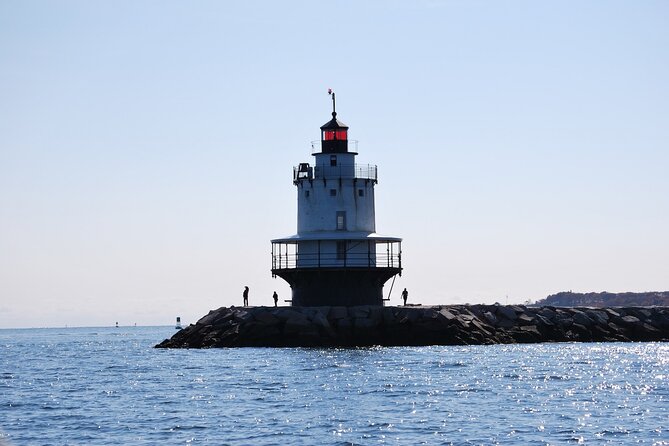
A smaller lighthouse nearby is known as Bug Light. It is distinguished by six Corinthian columns around its base. That detail makes it especially photogenic, and the cruise gives you an angle that reveals the building’s unusual design.
This is a good example of why you should listen closely to the guide. The building might look like a compact lighthouse from shore, but the columns and the architect’s background give it a stronger story. Guides have been praised for explaining these details in an entertaining way, rather than simply listing construction dates.
The exact viewing experience depends on where you sit. The upper deck provides open views and better photo angles, but it can be cold and windy. The lower deck offers more shelter, though the narration may be harder to hear from the back. One person found the commentary difficult to follow from the lower rear area. If the history matters as much as the scenery, sit closer to the guide or choose an upper-deck position with a clear line to the speaker.
Same waterfront, a different kind of trip:
- San Francisco: Golden Gate Bay Cruise
★ 4.7 · 3,644 reviews - San Diego Harbor Cruise
★ 4.5 · 2,980 reviews - Miami Combo: City Tour, Biscayne Bay Cruise and Everglades Airboat Ride
★ 3.5 · 2,487 reviews - Miami: Half-Day Open-Top Bus Tour Plus Biscayne Bay Cruise
★ 4.1 · 2,420 reviews
Fort Gorges and the military story of Casco Bay
The cruise also passes Fort Gorges, a Civil War era fort on Hog Island Ledge. It was modeled after Fort Sumter in Charleston and later used as a storage facility during both World War I and World War II.
From the water, the fort gives the route a change of mood. Lighthouses are about navigation and safety. Fort Gorges is about defense, harbor control, and the fear that an enemy might approach by sea. Its position in Casco Bay makes more sense when viewed from a boat, because you can see how it helped protect the water route into Portland.
Do not expect a walking tour of the fort. The experience is a pass-by view with narration. That is enough to understand its place in the harbor, but not enough to inspect rooms, walls, or military details up close. If you want a site visit, this cruise should be part of a larger Portland plan, not your only fort experience.
The 1905 lighthouse on Portland Harbor’s northern entrance
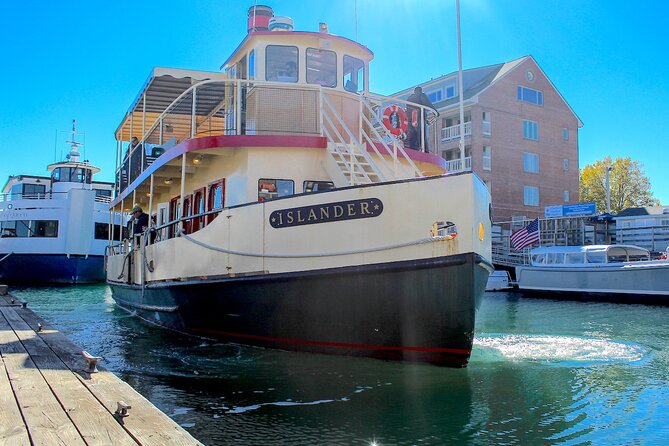
A later lighthouse, built in 1905, marks the northern entrance into Portland Harbor. It sits on about a quarter-mile of ledge and is a twin of Graves Light near Boston.
The setting is the point. A lighthouse placed on a long ledge tells you how dangerous these waters could be for ships approaching from the north. The boat gives you the needed distance to see the light, the exposed rock, and the open route around it.
This part of the cruise can be especially rewarding on a bright day, when the structure contrasts with the water. It can also be one of the more weather-sensitive sections. Wind tends to feel stronger away from shore, and one direct account noted that the water became choppy for part of the ride. If you are prone to seasickness, take that possibility seriously. The boat ride is often smooth, but Casco Bay is not a pond.
Islands, Diamond Pass, and Halfway Rock
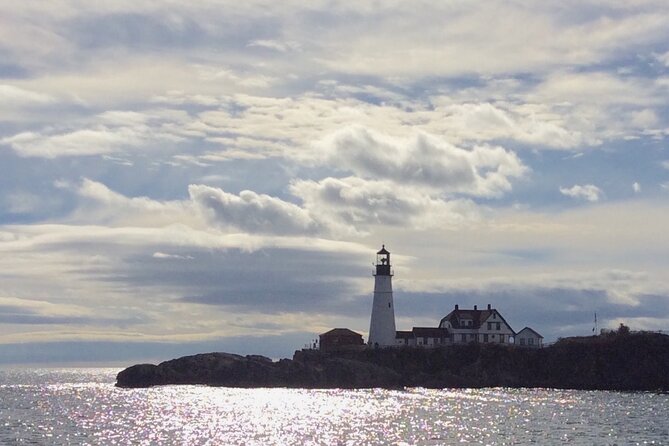
The cruise is not only about lighthouses. It passes islands including Peaks Island, House Island, Cushing Island, Little Diamond Island, and Great Diamond Island. You also travel through Diamond Pass and may see Halfway Rock, a seal habitat.
These islands give you a useful sense of Casco Bay’s scale. From Portland, the coast can seem like a single waterfront. From the water, it breaks into separate communities, rocky ledges, passages, and protected coves. The island views are a strong reason to choose this cruise even if you have already seen Portland’s main streets.
Halfway Rock adds a wildlife note, though you should not book this as a dedicated seal-watching trip. The description identifies it as a seal habitat, but sightings are not guaranteed. The same is true of lobster boats. You will likely see working boats in the harbor, but the experience is sightseeing rather than a guaranteed wildlife encounter.
The route’s name includes Diamond Pass for good reason. Moving through a natural passage gives the cruise a sense of travel and discovery, even though the boat remains close to Portland. You get changing views without the hassle of moving between separate coastal sites by car.
What the narration adds to the ride
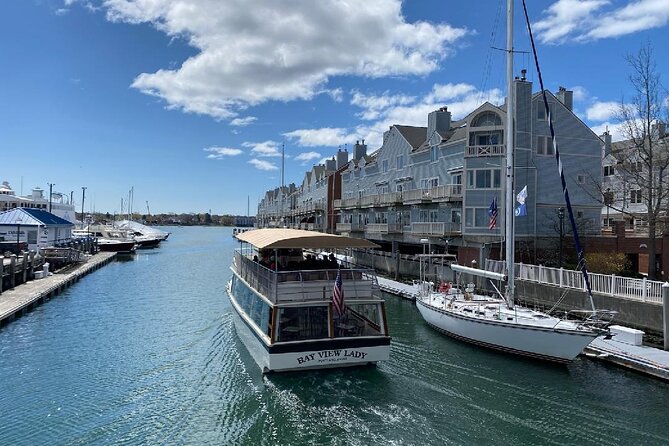
The strongest praise has gone to the guides. Mark, described as a lifelong Portland local, has been singled out for combining detailed explanations with personal perspective. Carl has also been praised for being informative and funny. Other crew members, including Victoria and Nate, have been noted for their friendly, relaxed approach and willingness to answer questions.
That matters because the scenery alone can be hard to interpret. A lighthouse may look attractive, but the guide explains its date, purpose, architect, or place in the shipping channel. A fort becomes more interesting once you understand its connection to Civil War defenses and later wartime storage.
The best narration also leaves room for silence. Several comments describe a pleasant mix of history, culture, scenery, and quiet time. I prefer that approach. You should come away with a clearer sense of Portland, not a headache from constant announcements.
There is one practical caution. Sound quality and seating position affect how much you hear. The lower back section may not be ideal if you want every detail. Sitting near the front, or arriving early for the upper deck, can improve the experience.
Choosing your seat and preparing for the weather
The upper deck is the popular choice, with space limited to around 50 people. Arriving about 30 minutes before loading gives you a better chance of sitting there. When facing the front of the boat, the right side has been identified as a particularly useful position for photos.
Do not dress only for the temperature on Commercial Street. The water can feel colder, especially when the boat is moving. One direct tip suggests that conditions may feel windy and cold below 75 degrees. A jacket is sensible, even on a pleasant afternoon.
Weather also affects the sightseeing. On an overcast or windy day, you may still enjoy the history and see several lighthouses, but distant islands and smaller details can be harder to make out. One cruise under poor conditions still offered four lighthouse views and several islands, but two expected sights were not visible.
The experience requires good weather. If the operator cancels because conditions are poor, you can choose another date or receive a full refund. You can also cancel for a full refund if you do so at least 24 hours before the start time. Changes or cancellations inside that window are not accepted for a refund.
Who will get the most from this cruise
I would recommend this outing to first-time visitors who want a broad introduction to Portland. It also works well for families because the ride combines movement, historic structures, islands, and open views. The onboard restroom and snack bar make the nearly two-hour duration easier for a mixed-age group.
Couples and solo visitors can use it as a calm break from walking around town. You get a different view of Portland without committing to an all-day excursion. It is also useful early in a visit, since the harbor orientation can help you understand the city and surrounding islands.
History-minded sightseers will appreciate the forts, lighthouses, and commentary. Photographers should arrive early and plan for wind. People who dislike boats, cold air, or uncertain visibility should think twice, especially if they want guaranteed close views.
The trip can accommodate most people, and service animals are allowed. The maximum group size is 80, which keeps it from feeling like an enormous harbor crowd, though the upper deck may still fill quickly.
Is the $54 price fair?
At $54, I would call the cruise a fair purchase rather than a bargain. You are paying for more than a short boat loop. The fee includes a nearly two-hour route, a guide, several lighthouse views, island scenery, Fort Gorges, and the convenience of returning to the same downtown meeting point.
The value is strongest when the weather is clear and you care about context. You could see some of Portland’s waterfront for free, but you would not get the same angle on the lighthouses or the connected explanation of channels, forts, and islands.
The value is weaker in poor visibility, when the sights become distant shapes. Still, the narration can carry the experience. If you view this as a scenic history lesson with a boat ride attached, the price makes sense. If you only want a quick photo of one lighthouse, choose a shorter or land-based option instead.
Should you book the Harbor Lights and Sights Cruise?
Book it if you want a relaxed introduction to Portland Harbor, especially on a clear day. The strongest reasons are the wide range of sights and the local narration, with lighthouses, forts, islands, and harbor history all packed into one outing.
Arrive early for the upper deck, bring a warm layer, and sit on the right side facing forward for better photo opportunities. If the forecast is poor, keep your expectations flexible. You may see fewer distant sights, but the cruise can still deliver a worthwhile history lesson and a fresh view of Portland.
I would skip it only if you need an active shore excursion, guaranteed wildlife sightings, or a close tour inside a lighthouse or fort. For most people spending time in Portland, this is a sensible way to see the city from its natural front door: the water.
FAQ
How long is the Harbor Lights and Sights Cruise?
The cruise lasts approximately 1 hour and 45 minutes.
Where does the cruise depart?
It departs from 170 Commercial Street in Portland, Maine.
Where does the cruise end?
The cruise returns to the same meeting point at 170 Commercial Street.
How much does the cruise cost?
The listed price is $54 per person.
What language is the tour offered in?
The experience is offered in English.
Is there food or drink available onboard?
Yes. The boat has a bar and snacks, along with comfortable restrooms.
How many people can join the cruise?
The maximum group size is 80 people.
Are service animals allowed?
Yes. Service animals are allowed.
What happens if the cruise is canceled because of bad weather?
You will be offered a different date or a full refund. You may also cancel at least 24 hours before the start time for a full refund.
Just added around the USA
- Shared 2 Hour September Sunset Cruise from Gig Harbor★ 5.0 · 13 reviews
- City Sightseeing Seattle HOHO Bus and Locks or Harbour Cruise★ 3.5 · 8 reviews
- Official Alcatraz Tour Ticket with Ferry Rides From Pier 33★ 4.0 · 10 reviews
- Official Alcatraz Tour with Golden Gate Bridge Bay Cruise★ 4.5 · 6 reviews
- San Francisco Bay Cruise and City Combo Tour★ 3.5 · 3 reviews
- San Francisco Bay Cruise, Muir Woods and Sausalito Combo Tour★ 5.0 · 4 reviews
- Fisherman’s Wharf Highlights Tour + Golden Gate Bay Voyage★ 5.0 · 11 reviews
- Alcatraz Night Tour with SF Bay Cruise★ 4.5 · 6 reviews
Harbour Lights Night Cruises, compared.
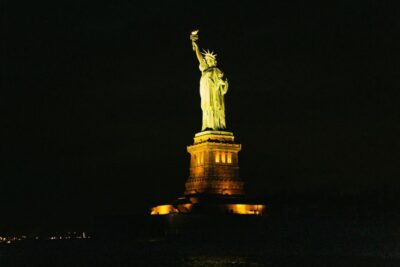
Circle Line 2h Harbor Lights Cruise Skip-The-Box-Office
Read our review →
Circle Line: 2hr – New York City Harbor Lights Cruise
Read our review →
Sunset & Harbor Lights Dinner Sail from the Marriott’s Frenchman’s Cove
Read our review →
Harbour Lights Beach Extravaganza and Dinner Show
Read our review →
Marsamxett Harbour and Grand Harbour Cruise by Night
Read our review →
Browse the lists this tour appears in