
REVIEW · GERMANY HARBOUR CRUISES
Cologne: 3-Hour Harbor Tour Cruise
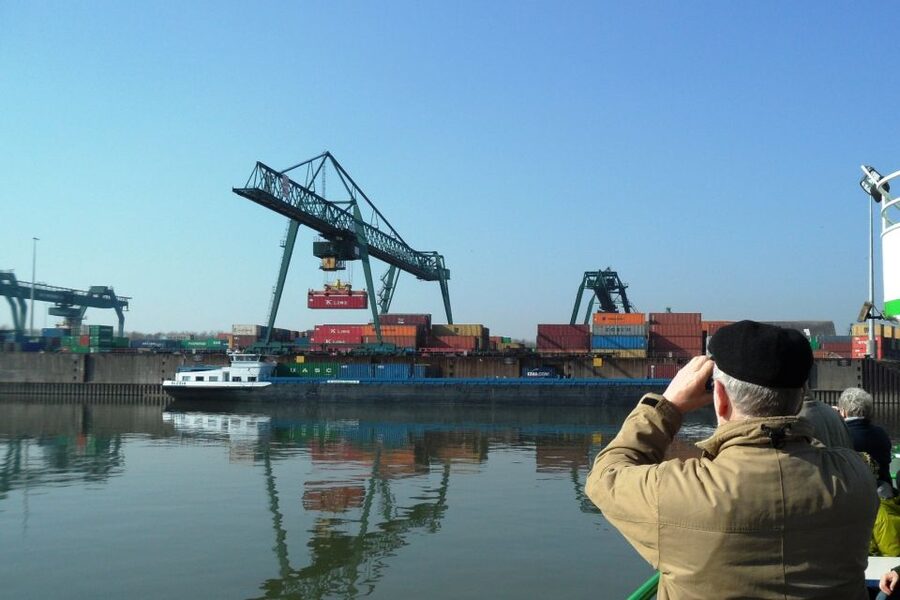
Harbors reveal Cologne’s working side. This three-hour cruise takes you beyond the postcard views of the cathedral and into Rheinau, Deutz, Mülheim, and Niehl, where cargo, containers, warehouses, and river traffic explain how the city functions. I like the route because it gives you a different Cologne, and I like that a live local guide supplies the facts and stories rather than a recorded voice.
The two strongest points are the Niehl container harbor, one of Germany’s largest inland harbors, and the detailed look at Rheinau Harbor’s past. The main drawback is simple: the tour is conducted in German only. Commentary volume can also be an issue, especially if another group on board becomes loud.
Key points to know before boarding
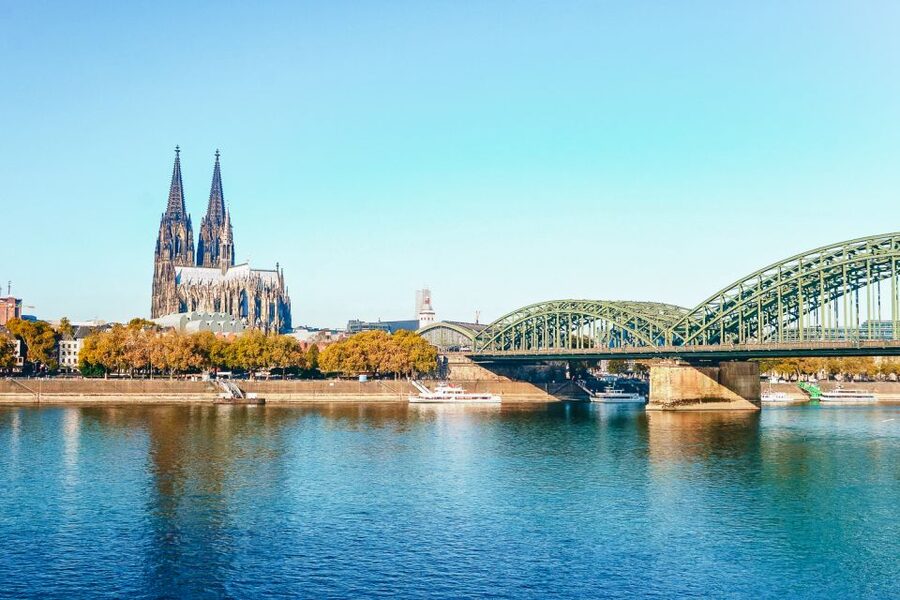
- Rheinau Harbor brings Cologne’s past into focus: You hear about its history, dates, and changing role in the city.
- Niehl provides the biggest industrial payoff: The cruise heads into one of Germany’s largest inland container harbors.
- Deutz and Mülheim show a broader river system: These stops help explain how several harbor areas fit together.
- The guide speaks live in German: This suits German speakers far better than visitors who need English commentary.
- Three hours gives the route room to breathe: You are not simply passing the harbor entrances at speed.
- The boat has practical limits: Toilets and the open deck are reached by stairs, and electric wheelchairs are not allowed.
Why Cologne’s harbors are worth your time
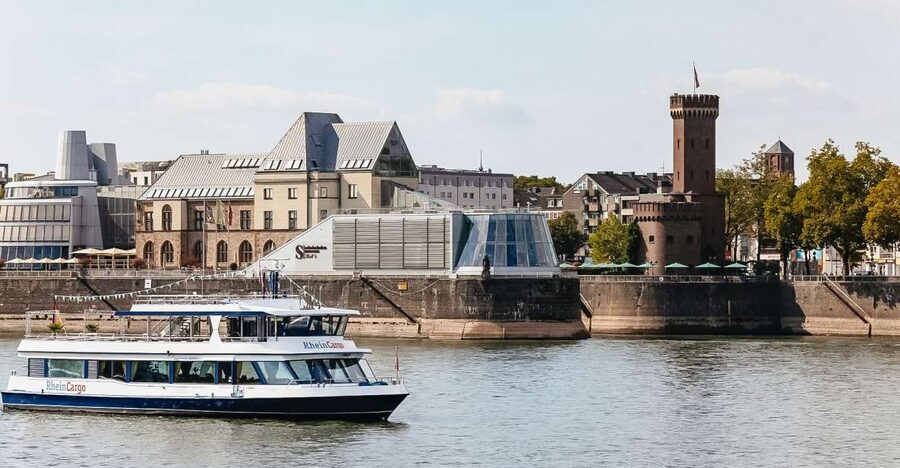
Cologne is famous for its cathedral, Roman remains, museums, and old-town streets. Those sights deserve your attention, but they tell only part of the city’s story. The Rhine is also a working transport route, and the harbor areas show the practical side of Cologne that is easy to miss from land.
I like harbor cruises because they change the scale of a city. From the river, you can see how facilities connect, how much space cargo handling requires, and why the Rhine matters far beyond sightseeing. This is not a glamorous pleasure cruise built around music and cocktails. It is an informative outing about shipping, infrastructure, and local history, with scenery along the way.
The route includes four distinct harbor areas. Rheinau offers the clearest historical angle. Deutz and Mülheim broaden the picture, while Niehl supplies the strongest sense of modern freight activity. The guide adds dates, figures, explanations, and anecdotes as the boat moves in and out of the harbor areas.
That combination matters. You are not only looking at cranes or riverbanks. You are getting the background needed to understand what you see.
More Three-Hour Trips in Germany:
- 3 Hour Crab Island Tour from Destin Non-Private with Floats
★ 5.0 · 189 reviews - Destin: Public 3 Hour Crab Island and Harbor Tour
★ 4.9 · 57 reviews - Sydney: 3 Hour Abba Tribute Show Harbour Cruise with Buffet
★ 4.0 · 10 reviews
Meeting the boat at Konrad-Adenauer-Ufer
The meeting point is Konrad-Adenauer-Ufer, pier number 10, opposite the Musical Dome and Goldgasse. That location places you near a familiar central part of Cologne, so you can combine the cruise with time around the cathedral area or the riverfront.
You should arrive 15 minutes before departure. Give yourself enough time to find the correct pier, especially if the riverfront is busy or you are carrying bags. The operator is Kölntourist Personenschiffahrt am Dom GmbH.
The departure area is useful for orientation because it sits close to major Cologne landmarks, but do not assume that being near the city center means you can arrive at the last moment. Pier numbers matter, and boarding is easier when you have a little spare time.
Oversize luggage is not allowed. That makes this a poor choice for the period between checking out of one hotel and checking into another unless you have somewhere else to store your bags.
Rheinau Harbor and Cologne’s changing waterfront
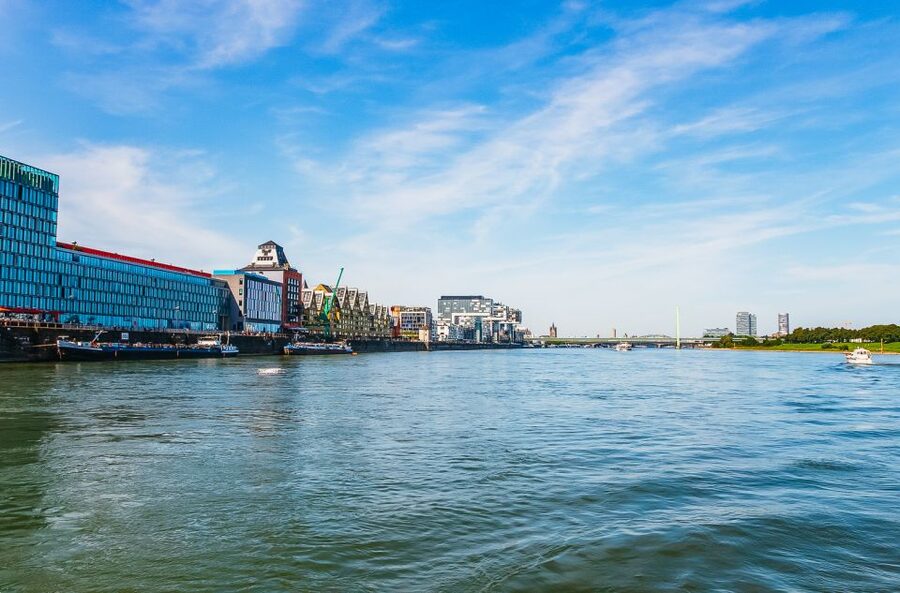
Rheinau Harbor is the best part of the tour for understanding how Cologne’s waterfront has changed. The guide explains its history, including dates and figures, so you get more than a passing view of the buildings and harbor structures.
I like this section because it connects the river to the city’s growth. A harbor is never just a patch of water. It reflects trade, transport needs, engineering, and changes in the way a city uses its riverfront. The live commentary helps turn those broad ideas into a local story.
Pay close attention here if you enjoy urban history. The guide may point out details that would look ordinary from shore, then explain why they matter. Since the information is spoken live, you can hear the tone and emphasis of a local guide instead of following a fixed recording.
The drawback is that you need to understand German to get the full value. The visual experience remains available to everyone, but the explanation is the heart of this cruise. If you speak little or no German, you may spend much of the three hours watching without understanding the historical points being made.
Deutz Harbor and Mülheim Harbor
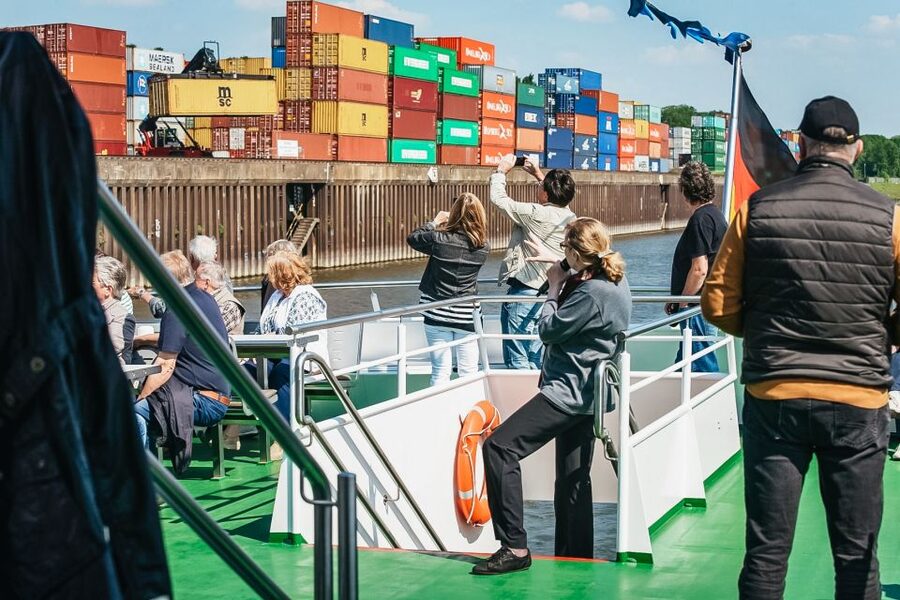
The cruise continues to Deutz Harbor and Mülheim Harbor, giving you a wider view of Cologne’s harbor network. These sections are useful because they prevent the outing from becoming a single-site tour.
Deutz is close to the central city, but the harbor perspective lets you see it as part of the Rhine’s working infrastructure. You can compare the riverfront near the center with the more industrial areas farther along the route.
Mülheim adds another layer. The guide discusses the harbor’s role, history, and figures, helping you understand that Cologne’s river activity is spread across several areas rather than concentrated in one dock.
I appreciate this part of the itinerary for its sense of connection. You are moving through different places, but the commentary ties them together. That makes the cruise more useful than a simple scenic ride with occasional landmark announcements.
The amount you enjoy these harbors will depend on your interests. If you want nonstop medieval buildings and cathedral views, this is not the right cruise. If you enjoy transport, city planning, engineering, or the everyday systems that keep a large city supplied, Deutz and Mülheim add real value.
A few more boat trips around Germany worth a look
- Hamburg: 90-Minute Evening Lights Harbor Cruise
★ 4.5 · 7,728 reviews - Hamburg: 1-Hour Evening Harbor Lights Cruise
★ 4.4 · 5,073 reviews - Hamburg: 1-Hour Harbor Cruise
★ 4.6 · 2,283 reviews - Hamburg: 1.5h Grand Harbor Evening Lights Cruise
★ 4.2 · 1,316 reviews
Entering Niehl, one of Germany’s largest inland container harbors
Niehl is the main reason to choose this particular outing over a standard city sightseeing cruise. The boat heads into the container harbor, described as one of Germany’s largest inland harbors.
This is where the cruise feels most different from the usual Cologne program. Instead of looking only at famous monuments, you are seeing the scale of inland freight movement. Containers, loading areas, harbor facilities, and working river traffic make the Rhine’s economic role easier to grasp.
I would save your attention for this section. Watch the shoreline, listen for the guide’s explanations, and notice how the harbor is organized. The point is not simply to spot one impressive object. It is to see how a large inland harbor operates as part of a transport network.
One piece of practical advice: choose a seat where you can hear clearly, then move to the open deck when you want a better view, if the stairs are manageable for you. The open deck is not accessible without stairs, so some people will need to remain in the interior areas of the boat.
The Niehl section may also feel less polished than a sightseeing cruise through central Cologne. That is part of its appeal. You are seeing a functional industrial area, not a decorated riverfront designed primarily for visitors.
The live German commentary makes the difference
The guide speaks live in German throughout the tour. That is a major advantage for German speakers because the presentation can respond to what is happening around the boat, add anecdotes, and explain details that might not fit neatly into a recorded script.
A live guide also gives the cruise a more personal feel. The delivery has energy, timing, and local character. Several ratings praise the guide’s presentation, calling the tour both informative and enjoyable. One high rating specifically praised the fact that the information was spoken live rather than played from a recording.
You should treat the German-only format as a firm booking decision. There is no stated English commentary. If you understand German well, the cruise offers far more than a visual harbor ride. If you do not, the experience becomes mainly about scenery and atmosphere.
Sound quality is another consideration. One rating specifically noted that the commentary could be louder, and another account described a noisy group on board making it hard to hear roughly half the presentation. That does not appear to be a regular feature of the tour, but it shows why your seat matters.
Try to sit close enough to the guide or loudspeaker to follow the explanation. Avoid standing near groups that are talking loudly. The boat is a shared public space, and a harbor cruise is much less rewarding when conversation drowns out the only commentary.
What the three-hour duration means
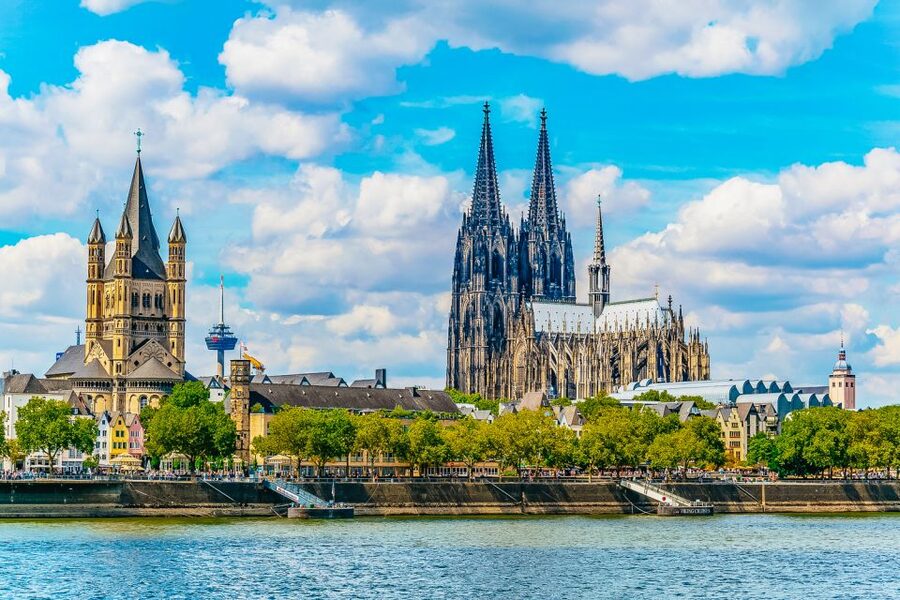
Three hours is long enough to cover several harbor areas without reducing the route to a quick pass. You have time to move into and out of the harbor sections, listen to explanations, and settle into the changing views.
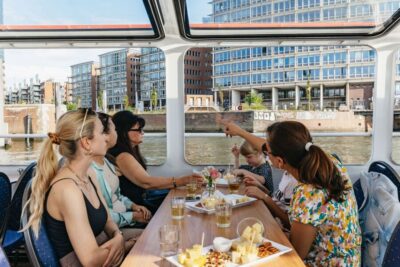
I see the length as a strength for people who want substance. The guide can explain Rheinau, Deutz, Mülheim, and Niehl instead of giving each place a rushed sentence. It also gives you time to relax, order a drink, and watch the river.
At the same time, three hours is a serious block of your day. If your Cologne visit is very short, you will need to decide if the harbor story matters more to you than another museum or walking route. This is not an efficient way to tick off many central landmarks.
The pace should suit you if you like sitting and listening. It may feel slow if you need constant activity or prefer a tightly packed schedule. Bring patience, and think of the cruise as a guided city study from the water rather than a fast attraction.
Drinks and snacks are available for purchase on board, but they are not included in the $41 price. You do not need to plan the trip around a meal, but it is sensible to eat beforehand if you prefer not to buy refreshments on the boat.
Is $41 a fair price?
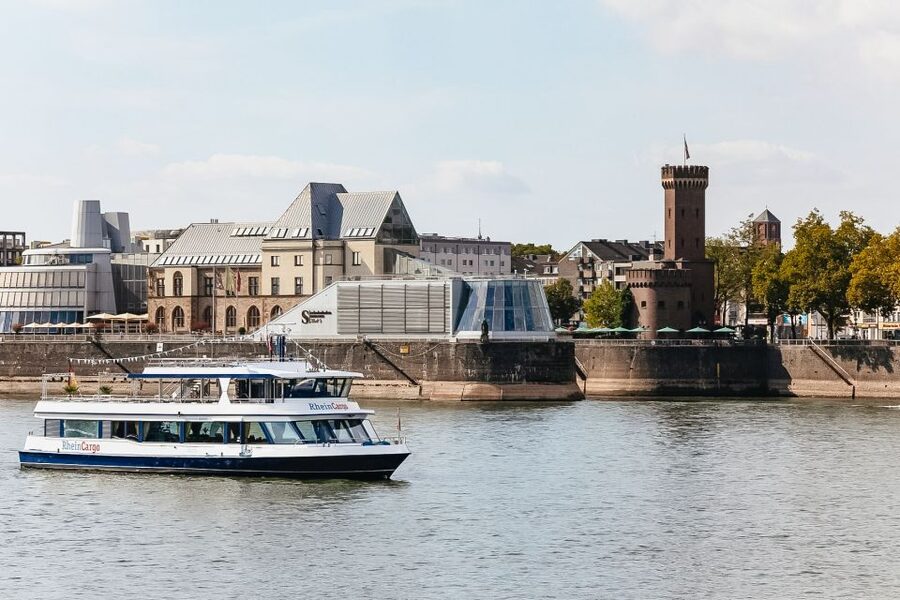
At $41 per person, this is not the cheapest way to see Cologne from the river. The value depends on how much you want the harbor information.
For a standard scenic ride, the price could feel high. You are paying for three hours, a route into working harbor areas, and live German commentary. The cruise earns its price when you care about the information and the less familiar parts of Cologne.
I think the value is strongest for German-speaking visitors who have already seen the cathedral and old town, or who want to understand the city beyond its famous center. It can also make a thoughtful shared outing. One booking was given as a gift to friends, and the recipients enjoyed the informative yet entertaining presentation.
The price includes the harbor cruise and live guide. Food, drinks, and snacks cost extra. You can reserve now and pay later, which helps if you are arranging a trip with several moving parts. Free cancellation is available up to 24 hours before departure for a full refund, according to the stated conditions.
Access, comfort, and who should skip it
The ships are not fully accessible. People using wheelchairs or walkers can take part, but the toilets and open deck are accessible only by stairs. Electric wheelchairs are not allowed for safety reasons.
That information matters before you book. If you need step-free access to the restroom or open deck, this cruise may not fit your needs. Contacting the operator before booking would be sensible if your mobility needs are not covered by the stated information.
Alcohol and drugs are not allowed, and oversize luggage is prohibited. Drinks are available for purchase, but this is not presented as a party boat. The account of a loud group causing trouble is a useful reminder that the quality of a spoken tour depends partly on the behavior of everyone on board.
I would choose this cruise for:
- German speakers who enjoy local history and infrastructure
- Repeat visitors to Cologne who want a new angle on the city
- People interested in rail, shipping, cargo, engineering, or urban development
- Families or friends looking for a relaxed three-hour group outing
- Anyone curious about Niehl and Cologne’s working river
I would think twice if you need English commentary, step-free access, or a quick sightseeing trip focused on famous monuments.
My advice for getting the most from the cruise
Arrive 15 minutes early and go directly to pier number 10. Keep your luggage small, and do not bring an oversize bag.
Choose a seat with clear access to the guide’s voice. If the boat offers a choice of indoor and outdoor seating, balance comfort with sound. The open deck gives you a better view, but stairs are required.
Bring your interest in the city’s practical side. The best moments are likely to come when a simple harbor structure is explained through its history or purpose. If you only want scenic photographs, you may find parts of the route plain. If you listen closely, those same areas can become the most revealing.
I would also keep your schedule flexible after the cruise. A three-hour river outing is long enough that you should not book another attraction with a tight, nonrefundable start time immediately afterward.
Should you book the Cologne harbor cruise?
Book it if you want to understand Cologne as a working Rhine city, not just as the home of a famous cathedral. The visits to Rheinau, Deutz, Mülheim, and especially Niehl offer a useful look at harbor life, while the live guide adds local detail and anecdotes.
Skip it if you need English, dislike sitting for three hours, or want a cruise centered on monuments and entertainment. For German speakers with an interest in city history and industry, $41 is reasonable for the length and route. Arrive early, sit where you can hear, and treat the outing as an informative harbor study rather than a party boat.
FAQ
Where does the Cologne harbor cruise begin?
The meeting point is Konrad-Adenauer-Ufer, pier number 10, opposite the Musical Dome and Goldgasse.
How early should I arrive?
You should arrive at least 15 minutes before the scheduled start time.
How long does the cruise last?
The harbor cruise lasts three hours.
Which languages are available?
The live tour guide speaks German only.
Which harbors does the cruise visit?
The route covers Rheinau Harbor, Deutz Harbor, Mülheim Harbor, and the container harbor in Niehl.
Is the cruise accessible to wheelchair users?
People using wheelchairs or walkers can take part, but the ships are not fully accessible. The toilets and open deck can be reached only by stairs.
Are electric wheelchairs allowed?
No. Electric wheelchairs are not allowed for safety reasons.
Are food and drinks included?
No. Drinks and snacks are available to purchase on board, but they are not included in the tour price.
Can I cancel the booking?
You can cancel up to 24 hours in advance for a full refund. You can also reserve now and pay later.
Just added around Germany
- Wismar: Harbor Cruise with Sea Animal Fishing and Guide★ 4.6 · 22 reviews
- Wednesday Regatta with harbour tour★ 4.8 · 8 reviews
- Hamburg harbor tour with a barge★ 5.0 · 24 reviews
- Yacht Sailing After Work Tour of Hamburg Harbor★ 5.0 · 13 reviews
- Sailingyacht-Event “Cruise in the City” – unique harbor tour!★ 5.0 · 7 reviews
- Rostock: Hot Rod Harbor City Tour★ 4.9 · 16 reviews
- Hamburg: Line C Sightseeing Tour Hop On Hop Off and Harbor Cruise★ 3.7 · 8 reviews
- Hamburgs Highlights: Harbor Cruise & Reeperbahn Walking Tour★ 5.0 · 5 reviews
Germany Harbour Cruises, compared.
1.5-Hour Evening Lights Harbour Cruise on a Ship
Read our review →Browse the lists this tour appears in